
FAAC Gate Repair in Temecula: A Homeowner’s Guide
FAAC operators aren’t like most American gate openers. They run on an electro-hydraulic system that uses pressurized oil to move the gate, not a chain or screw drive. If a technician opens the cover and starts treating it like a LiftMaster, you’re about to pay for their education. Here’s what Temecula homeowners actually need to know about keeping a FAAC gate running, and what to check before anyone picks up a wrench. If you’d rather skip the troubleshooting and have a specialist handle it, call (877) 358-4544 for a free estimate.
Why FAAC Gates Confuse Generalist Technicians
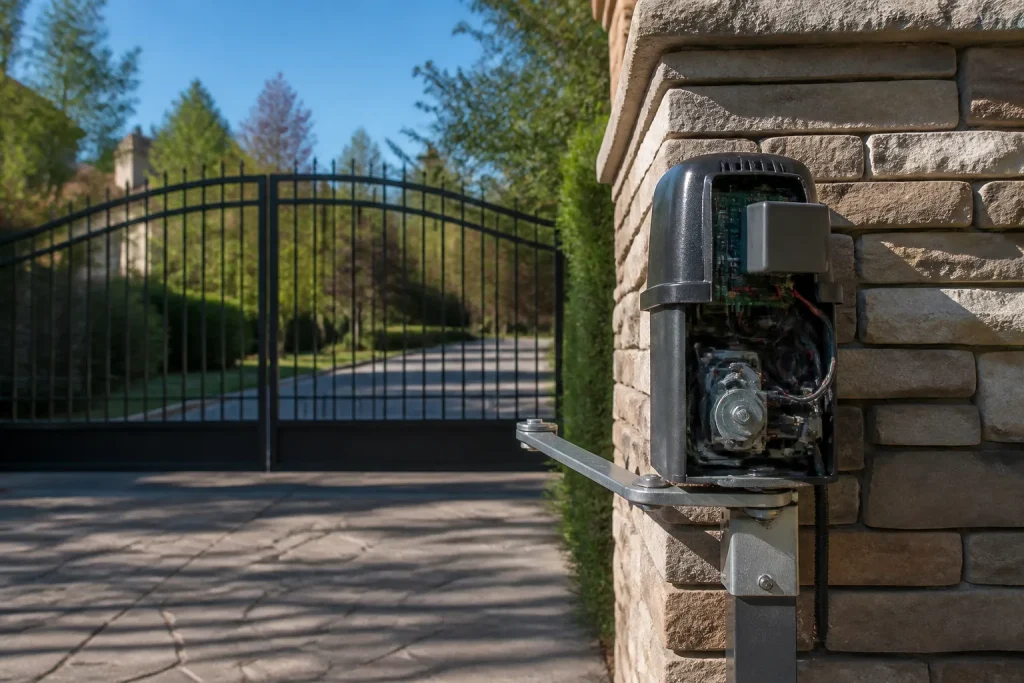
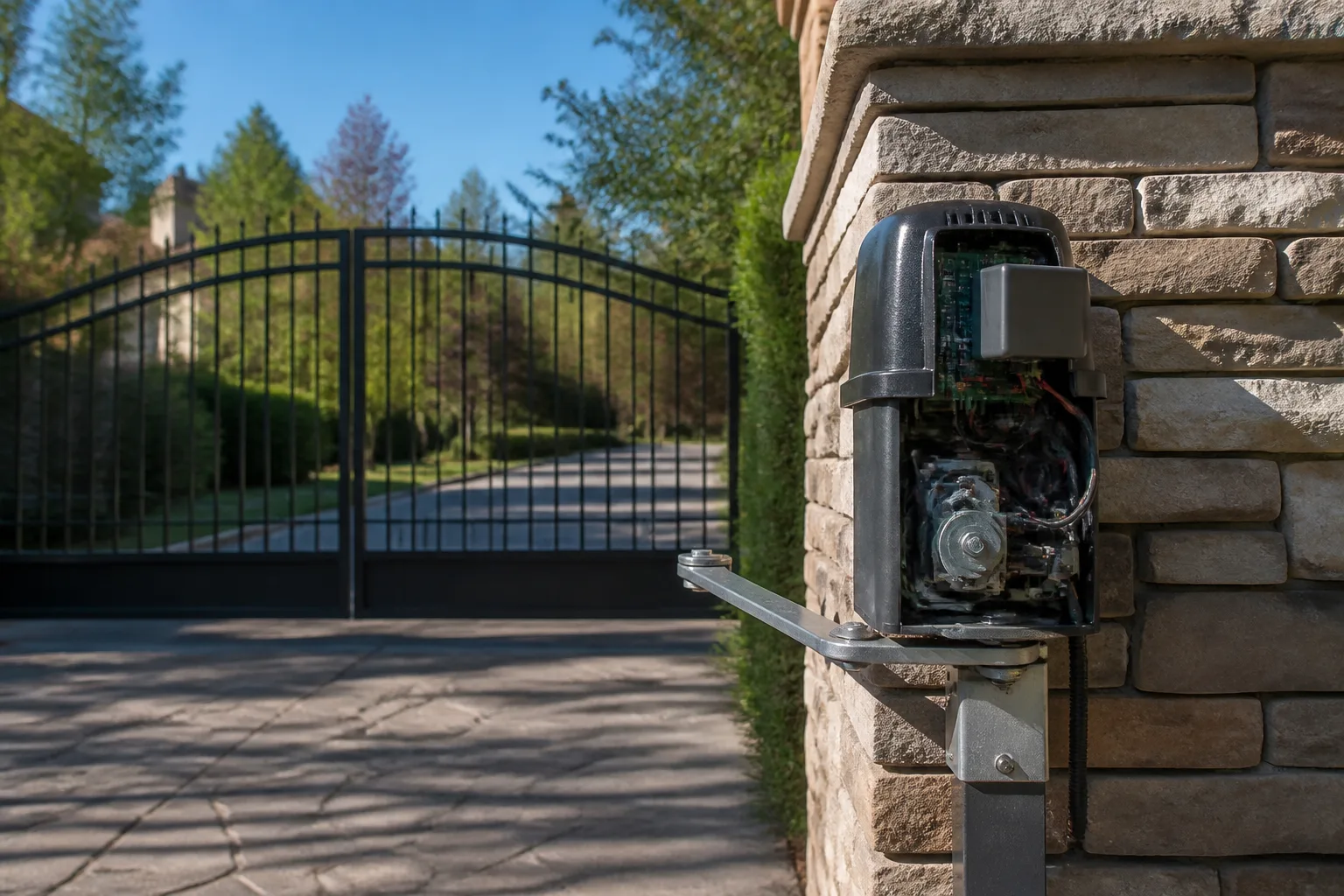
Most gate operators in American driveways are electromechanical. A motor spins, a chain or belt pulls the gate, and a limit switch tells it when to stop. FAAC builds electro-hydraulic operators instead. The motor pressurizes hydraulic oil inside a sealed piston, and that oil pressure is what pushes the gate leaf open and closed.
This matters more than it sounds like it should. When a chain-drive operator fails, a tech checks the chain, the sprockets, the motor. When a FAAC unit fails, the motor might be spinning perfectly fine while a leaking seal or a stuck solenoid valve keeps the gate from moving at all. A technician who only knows electromechanical systems sees a running motor and a stationary gate and concludes the motor is weak, or the board is bad, or the whole operator needs replacing. We have seen perfectly functional FAAC motors sent to the scrap pile because the actual problem was a $40 oil seal.
If you live in one of Temecula’s gated communities or a higher-end home with a custom driveway gate, there’s a good chance the original installer specified FAAC. The brand is common in European and upscale domestic installations. That means local parts sourcing and real diagnostic experience matter. A shop that knows FAAC will check the hydraulic circuit before touching the control board.
The Three FAAC Failure Modes We See Most in Temecula
Temecula’s dry heat and dusty conditions treat hydraulic systems a little differently than a coastal or humid climate would. The failures we see follow a pattern.
- Oil seal leaks. The piston that drives a FAAC operator is sealed with rubber O-rings and shaft seals. Years of Temecula summer heat hardens those seals. Eventually they weep hydraulic oil down the side of the operator or onto the mounting pad. The gate moves slower, struggles against the wind, or stops mid-travel. The fix is a seal rebuild, not a motor replacement.
- Solenoid valve faults. The solenoid valve controls which way the pressurized oil flows. When it sticks, the gate may open fine but refuse to close, or vice versa. A generalist will often blame the control board for this, because the board sends the signal and the valve doesn’t answer. The board is fine. The valve isn’t.
- E-series error codes on the control board. FAAC boards display codes when something in the system isn’t reporting correctly. E024 typically points to a photocell or safety edge problem. E032 often indicates the operator isn’t seeing the expected limit signal. Reading these codes as a brand-specific map, rather than guessing, is what separates a real FAAC diagnosis from a parts cannon approach.
If your gate shows an error code, write it down before you call anyone. It’s the fastest way to tell whether the company on the phone actually knows FAAC systems.
What to Check Before You Call a Technician
There are a few things you can do safely without tools or training. These checks won’t fix the gate, but they’ll tell you enough to have an intelligent conversation with whoever you call.
- Find the manual release. Every FAAC operator installed in Temecula has a mechanical release mechanism, usually a keyed lock or a pull handle on the operator housing. Disengage it and try pushing the gate by hand. If it swings freely, the problem is the operator. If it’s heavy, the gate itself is binding, and no operator adjustment will fix that.
- Look for oil. Hydraulic oil doesn’t evaporate. If there’s an oily film on the operator, a puddle on the mounting pad, or dark staining running down the housing, you have a seal leak. Tell the repair company exactly where you saw oil. It changes the diagnostic path immediately.
- Separate the operator from the access control. Does the gate work from the keypad but not the remote? Remote but not the keypad? The operator is likely fine and the problem is in the receiver, keypad, or loop detector. That’s access control work, not FAAC hydraulic work, and knowing the difference saves you a diagnostic fee going in the wrong direction.
When you call a repair company, ask them directly if they have experience with electro-hydraulic FAAC operators. Ask what the most common FAAC failure is. If they answer “the motor burns out,” call someone else. The most common failure is a seal leak.
Why FAAC Parts Sourcing Actually Matters Locally
FAAC is not a brand you’ll find at the local big-box hardware store. The parts distribution network runs through specialty gate suppliers and direct manufacturer channels. In the Temecula area, that means lead times depend on which component failed and whether the local supplier stocks it.
Common wear items like oil seals, solenoid coils, and safety photocells are usually available quickly. A full piston assembly or a specific E-series control board might take a few days to bring in. A shop that regularly services gate repair on FAAC equipment can usually tell you on the first call whether your part is a same-week fix or a special order.
This is another place where brand-specific experience pays off. A generalist quotes a whole new operator because they don’t know the rebuild path. A specialist quotes the $40 seal and the labor to install it. The customer with the broken gate doesn’t know the difference until the estimate arrives.
Questions to Ask Any FAAC Repair Company
Before you schedule service, ask three questions.
- “Do you carry FAAC hydraulic seals and valves, or do you order them?” A company that stocks wear parts has made a commitment to the brand. A company that orders every part after diagnosis is learning on your gate.
- “What does an E-series code mean on my model?” If they can’t answer what E024 or E032 indicates without looking it up, they haven’t seen enough FAAC boards to command confidence.
- “Do you diagnose the hydraulic circuit before replacing the motor?” The answer to this one tells you everything. If there’s hesitation, you’re talking to someone who treats FAAC like a LiftMaster.
FAAC is a well-engineered system. When it’s diagnosed correctly, it gets fixed correctly. When it’s guessed at, you spend money you didn’t need to spend. For electric gate repair in Temecula, we work on the system you already have, and we diagnose first and recommend second. That’s not a slogan. It’s the only way that makes financial sense.
When Hydraulic Work Becomes a Job for a Professional
There’s a line between checking your gate and working on it. Checking the manual release, looking for oil, and writing down error codes is smart homeowner diligence. Opening the hydraulic reservoir, loosening fittings, or trying to purge air from the piston is professional work.
Pressurized hydraulic oil can inject under skin from a pinhole leak. It’s not just messy. It’s dangerous. A FAAC operator under load is also strong enough to crush a hand or pin a person if the gate comes off its travel unexpectedly. We handle this equipment every day, and we still treat it with respect. If the checks above point to an operator-side fault, that’s the moment to step back and let a trained gate technician take over.
The same applies to electrical work inside the operator housing. Low-voltage control wiring is safer than line voltage, but a shorted capacitor or a miswired limit switch can still cause real problems. Verifying the diagnosis is a homeowner’s job. Performing the repair isn’t.
The Bottom Line
FAAC gates fail in predictable, brand-specific ways. Oil seals leak. Solenoid valves stick. Control boards throw E-series codes that mean something specific. A Temecula homeowner who knows those three patterns can avoid the most expensive mistake in gate repair: paying a generalist to guess wrong.
Here’s what to remember. FAAC operators are hydraulic, not chain-drive. If the gate binds manually, the operator isn’t the problem. If there’s oil visible, the seal is the problem. If the fault is only on one access point, the operator is probably fine. And if the company you call can’t answer basic FAAC questions on the phone, don’t invite them to your driveway.
If you’re in Temecula and your FAAC gate is acting up, Gate Repair Temecula offers free estimates. We’ll diagnose the system, explain what we found in plain language, and give you a written price before any work starts. Call (877) 358-4544. We answer 24/7. Fast dispatch from 7am to 7pm, Sunday through Friday.
Frequently Asked Questions
How much does FAAC gate repair cost in Temecula?
Most FAAC repairs in Temecula fall between $150 and $450 for common fixes like oil seal replacements, solenoid valve service, and photocell alignment. Control board replacement runs higher depending on the specific E-series model. The written estimate sets the final price. Call (877) 358-4544 for an exact quote. Estimates are free.
Can you fix a FAAC gate the same day?
We can often fix FAAC gates the same day when the part is in stock locally. Fast dispatch runs from 7am to 7pm, Sunday through Friday. We answer 24/7, so a call outside dispatch hours gets booked into the next opening. Call (877) 358-4544 and we’ll tell you what we can do.
Why is my FAAC gate opening but not closing?
That pattern usually points to a solenoid valve fault or a safety sensor issue, not the motor. The valve directing hydraulic flow to the closing side may be sticking, or a photocell may be reading an obstruction that isn’t there. We check both before touching the motor. Call (877) 358-4544 for a free estimate.
Do I need a new FAAC operator if it’s leaking oil?
Usually not. An oil leak means a seal has failed, and seals are replaceable. If the piston itself isn’t scored and the pump still builds pressure, a seal rebuild gets the operator working again for a fraction of replacement cost. A specialist will tell you if a rebuild isn’t worth it. Call (877) 358-4544 and we’ll give you a straight answer.
Written by the team at Gate Repair Temecula, serving Temecula since 2016.
Need Gate Repair Help?
Call Gate Repair Temecula - licensed & insured, here with fast help in Temecula.
(877) 358-4544