
Last updated November 4, 2026
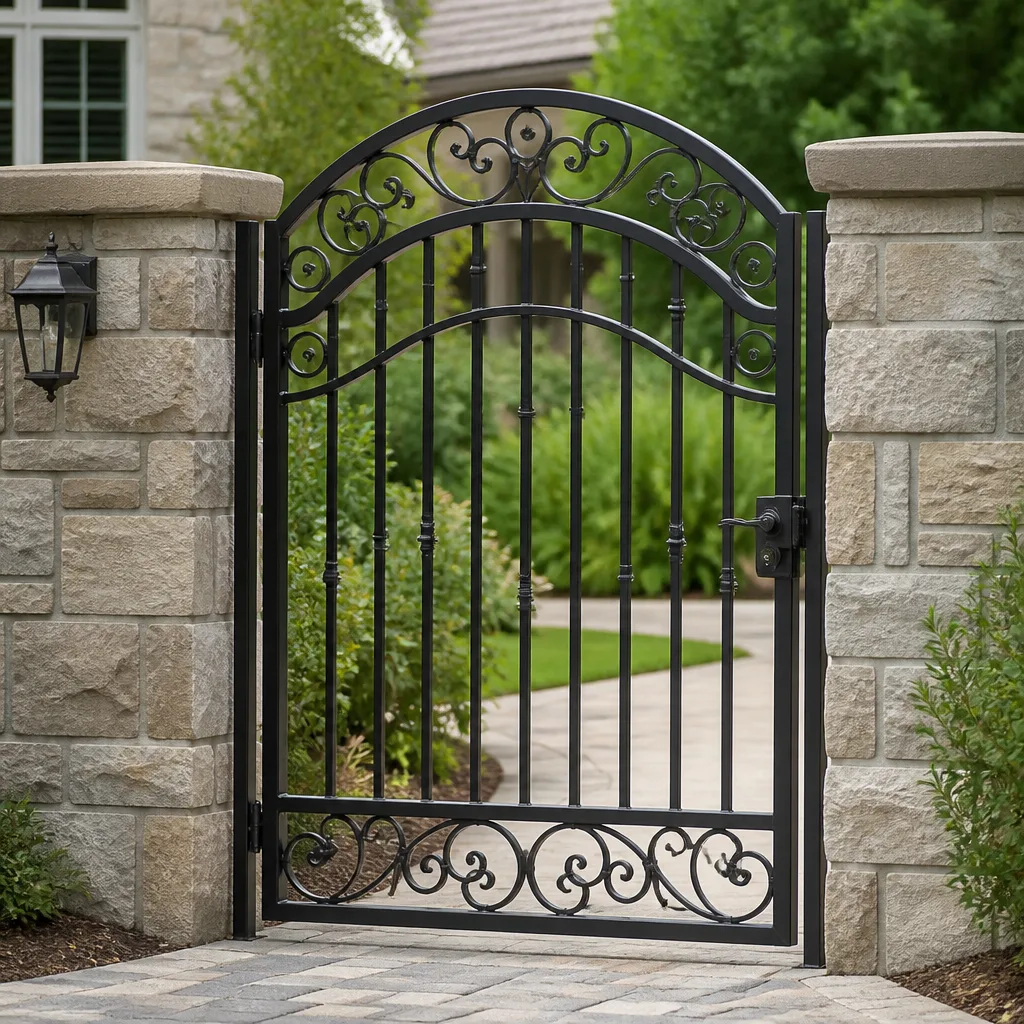 Wrought iron
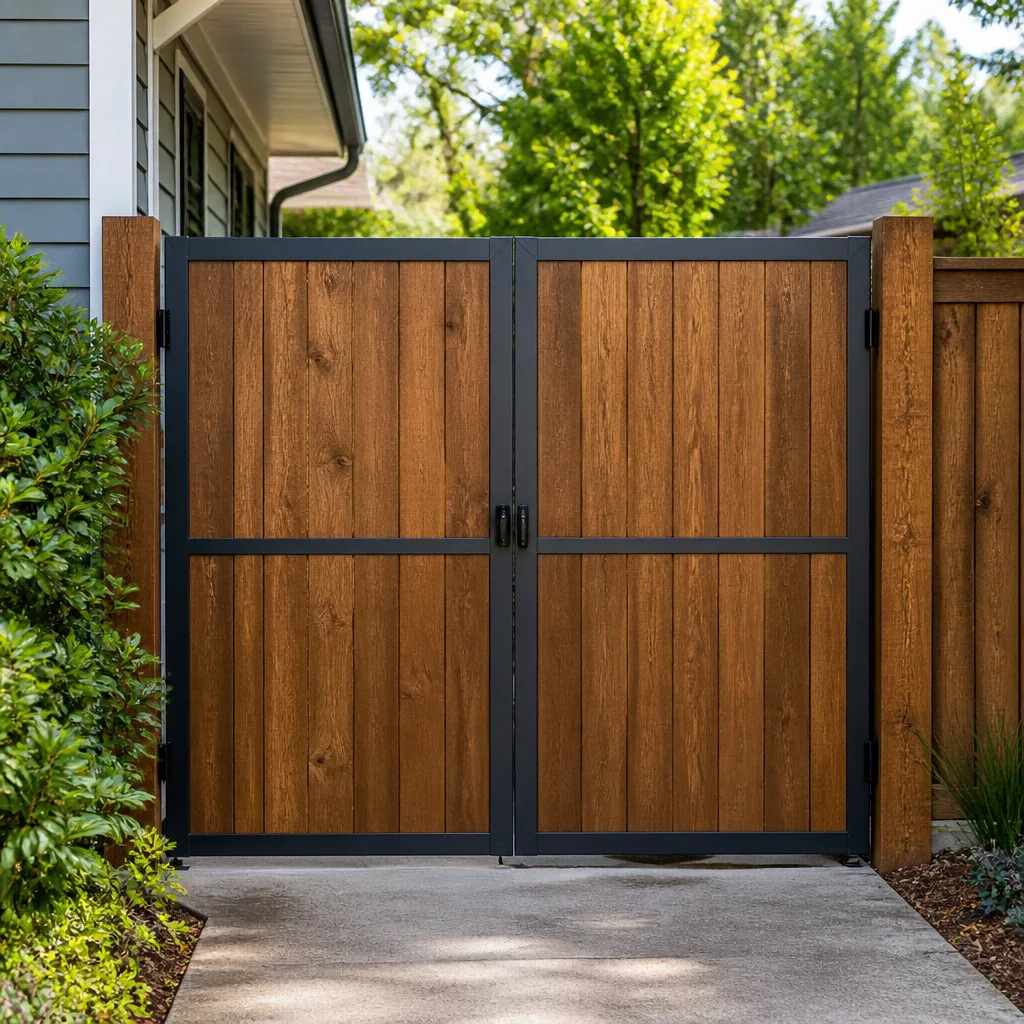 Wood & steel frame
 Farm & ranch
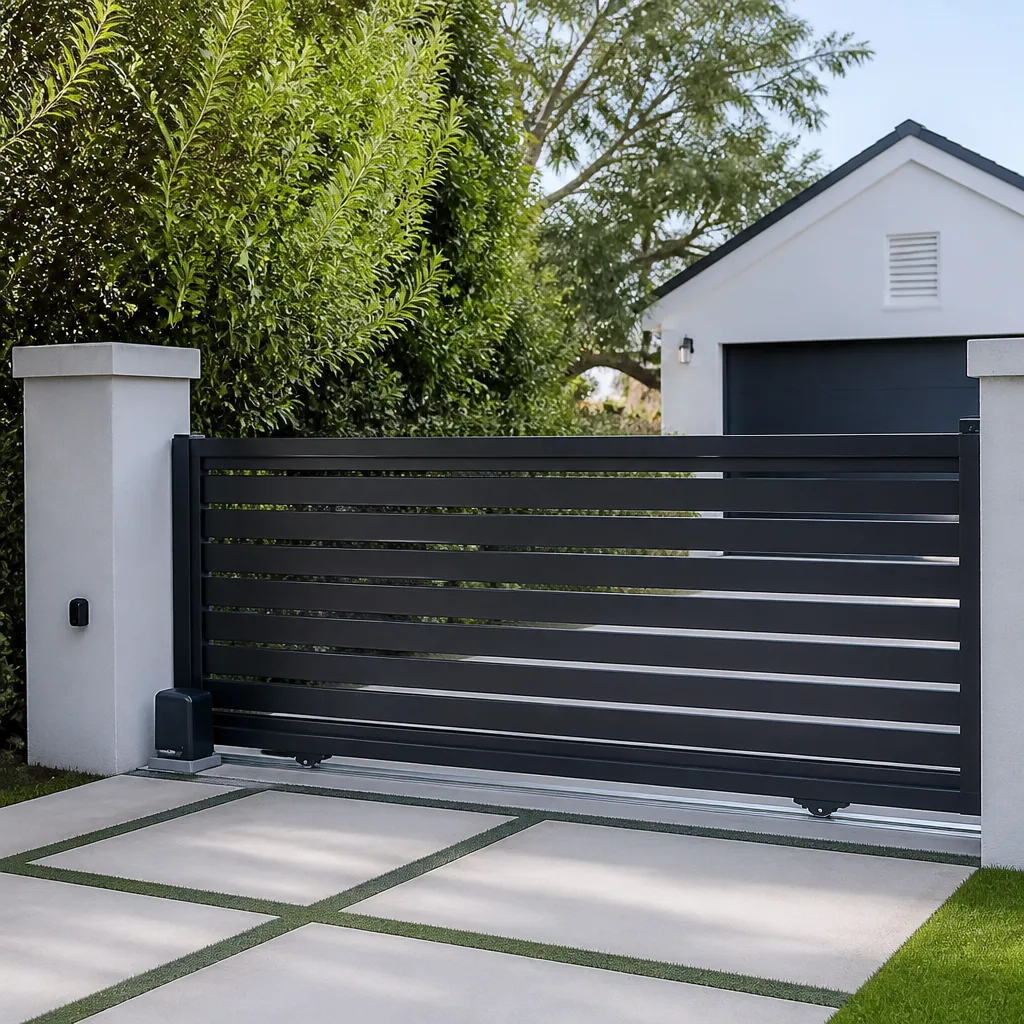 Sliding driveway gates
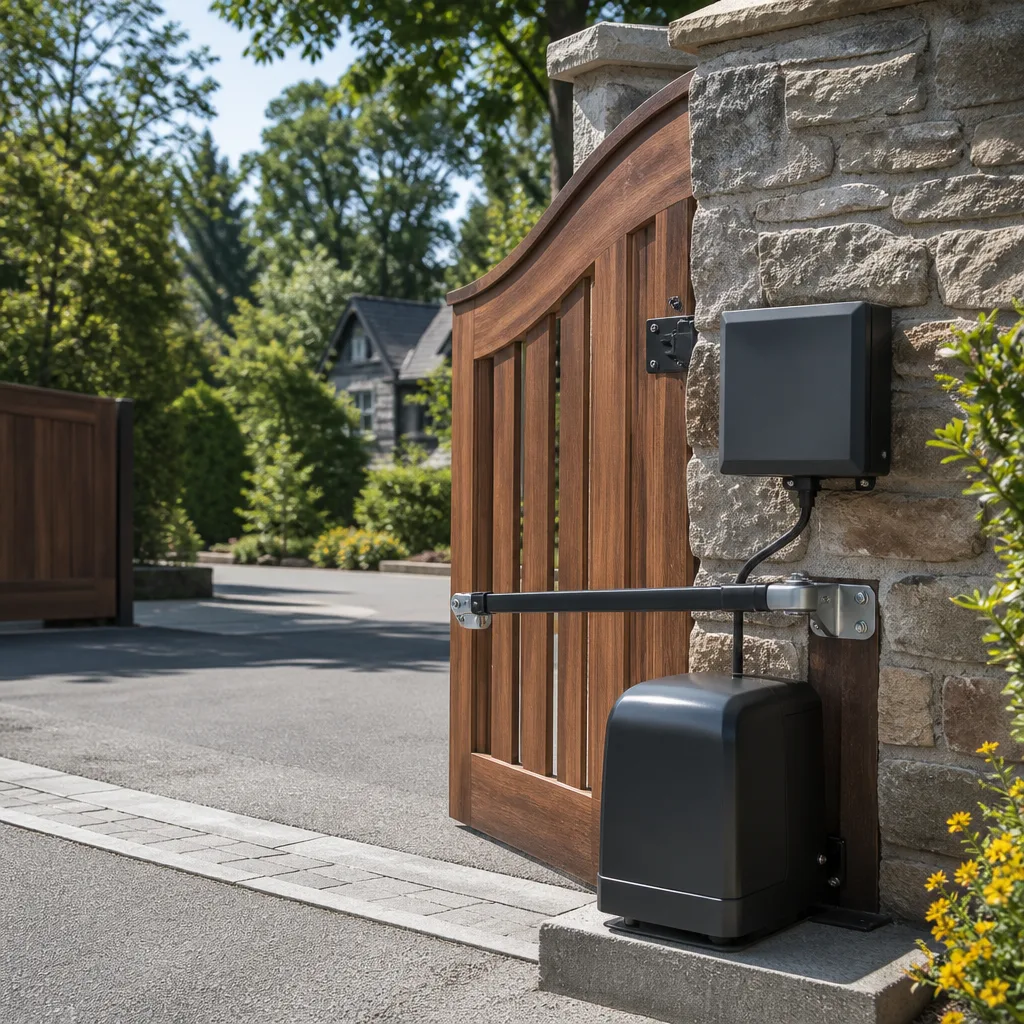 LiftMaster operators
Free on-site gate assessment - hinges, posts, and your LiftMaster or Nice gate operator checked before anything is quoted
The assessment is free and the quote is the invoice.
Get your free estimateGate Repair Warning Signs: A Temecula Homeowner’s Reference Guide
Most gate guides read like a list of symptoms with no diagnosis. A gate that hesitates, grinds, or reverses isn’t just “acting up” – it’s reporting a specific failure in a specific component. The difference between a $150 adjustment and a $1,800 motor replacement often comes down to whether you can read the signal correctly. This guide maps the twelve most common gate behaviors to their most probable root cause in Temecula’s particular environment, so you can call a gate repair specialist with a clear description instead of a vague worry.
Quick Answer
A gate that reverses immediately after closing usually points to an obstruction-sensor calibration issue or a limit-switch setting on the control board, not a failed motor. A gate that grinds only while opening typically indicates a drive-assembly problem, while grinding during closing suggests hinge or wheel-carrier wear. In Temecula, the most common repair triggers are control-board faults from summer heat exposure, wheel-carrier failures from decomposed granite dust, and limit-switch drift from daily thermal cycling.
Styles & brands we work with
- Wrought iron
- Wood & steel frame
- Farm & ranch
- Sliding driveway gates
- LiftMaster operators
Table of Contents
- The Symptom-to-Diagnosis Matrix: 12 Behaviors, 12 Answers
- Slow Opening vs. Slow Closing: Why They’re Different Problems
- The Listening Test: Drive Assembly vs. Hinge vs. Wheel Carrier
- Warning Signs That Aren’t Warning Signs
- Three Signs That Require Immediate Shutdown
- How Temecula’s Climate Accelerates Certain Gate Failures
- Common Mistakes to Avoid
- When to Call a Professional
The Symptom-to-Diagnosis Matrix: 12 Behaviors, 12 Answers
Every gate failure announces itself. The problem is that most homeowners don’t have a translation guide. We’ve built one based on what we see repeatedly across Temecula installations, from swing gates in Harveston to slide gates on the commercial corridors off Winchester Road. Here are twelve observable behaviors mapped to their most probable root cause.
1. Gate reverses two to four inches after closing. This is almost never a motor problem. The control board is receiving a signal that something is obstructing the path, and it’s reversing as designed. The usual culprits are a misaligned photo-eye, a limit switch set too tight, or an obstruction-sensing parameter that needs recalibration. This is frequently a board-setting adjustment, not a parts replacement.
2. Gate stops halfway and stays there. A gate that halts mid-cycle and doesn’t auto-reverse usually points to a limit-switch failure or a board that’s losing its position memory. On older systems, this often correlates with capacitor degradation in the operator. On newer setups, it’s commonly a firmware or parameter-reset issue.
3. Gate opens fine but won’t close without holding the button. This is the classic photo-eye or safety-edge failure signature. The system opens on command because it doesn’t need to check the safety circuit, but closing requires a clear safety signal. The fix is typically cleaning, realigning, or replacing the safety sensor.
4. Gate closes fine but won’t open without manual release. When closing works but opening doesn’t, the obstruction logic is usually fine – the problem is in the opening direction specifically. This commonly indicates a worn capacitor, a failing motor bearing, or a drive system binding under load. On electric gate repair calls, this is one of the most frequent patterns we diagnose.
5. Gate moves but stops at random positions with no obstruction. Random stopping points are a board-control issue. The most likely cause in Temecula is thermal stress on the control board from prolonged sun exposure on operator housings. These boards sit in enclosures that can exceed 130°F in summer, and the electrolytic capacitors degrade faster in that heat.
6. Gate makes a humming sound but doesn’t move. A hum with no movement means the motor is powered but can’t transfer torque. On a chain-drive or belt-drive system, the first check is the drive coupler or gearbox. On a direct-drive operator, a locked rotor points to a seized bearing or a failed motor capacitor. This is a fix-now signal – continued humming builds heat and cooks the motor windings.
7. Gate creeps or drifts open after being closed. A gate that slowly drifts after reaching the closed position has a limit-switch or position-encoder issue. On hydraulic systems, it can indicate a bypass-valve leak. The gate thinks it’s reached the right position; mechanically, it hasn’t. Repeated drifting wears the operator prematurely.
8. Gate slams too hard or finishes with a jolt. This is usually a limit-switch misadjustment. The switch is supposed to slow the gate before full stop; if it’s set wrong, the gate hits full speed all the way to the end. Over time, the shock loads the hinges, the wheel carriers, and the operator mounting bracket.
9. Remote works intermittently, keypad works fine. When the keypad is reliable but remotes are spotty, the problem is the radio receiver or the remote transmitters, not the operator. In Temecula, we see this worsen after heavy rain events, when moisture gets into antenna connections or receiver housings.
10. Gate opens by itself at random times. Phantom openings are usually radio-frequency interference or a failing receiver board. Nearby wireless cameras, garage door openers, or even certain municipal radio systems can trigger unshielded receivers. A newer issue we encounter: smart-gate accessories that were installed without proper network isolation.
11. Gate moves slower than usual in both directions. Any gate that’s uniformly slower in both directions points to either low voltage at the operator, a failing capacitor, or a motor that’s running on reduced output. If the slowdown is gradual over months, capacitor wear is the usual answer. If it’s sudden, check the breaker and the circuit feeding the operator.
12. Gate works, then stops working after rain. Temecula doesn’t get much rain, but when it comes, water intrusion into the operator housing or a junction box is a real risk. This is a sealing and drainage issue. The most overlooked spot is the bottom of the operator housing, where condensation from daily temperature swings accumulates without draining.
Slow Opening vs. Slow Closing: Why They’re Different Problems
This is the single most misunderstood distinction in gate diagnostics. A gate that’s slow in one direction and normal in the other is not a “slow gate” – it’s a gate with a directional problem that points to a specific component.
Slow opening usually means the motor is working against something. When a gate opens slowly, the operator is having difficulty applying full torque. This points to a failing capacitor (which stores the extra power the motor needs on startup), a worn drive belt or chain that’s slipping, or a motor bearing that’s dragging. In some cases, it’s a power delivery issue – a wire run from the house to the gate that’s undersized for the amperage draw, causing voltage drop under load. We see this on older Temecula properties where the gate was added years after the original electrical service.
Slow closing usually means the control logic is intentionally slowing the gate. When a gate is slow only on closing, the most likely cause is the obstacle-detection system telling the board to proceed cautiously. A photo-eye that’s partially blocked or a safety edge that’s intermittently making contact will cause the board to run the closing cycle at reduced speed. This is by design – the system is protecting people and property. But the interpretation is almost always wrong: homeowners assume the motor is dying, when in fact the motor is doing exactly what it’s told.
How to test the difference:
- Stand at the gate and watch a full open cycle. Time it mentally.
- Watch a full close cycle. Compare. A difference of more than 2-3 seconds between directions is diagnostic.
- If the gate is slow in both directions, look upstream: power supply, capacitor, drive assembly.
- If the gate is slow in one direction only, look at the control inputs for that direction: limit switches on slow-open, safety sensors on slow-close.
This single test saves service time and prevents unnecessary parts replacement. When a customer calls describing this symptom correctly, we arrive with the right parts on the truck instead of spending an hour diagnosing on site.
The Listening Test: Drive Assembly vs. Hinge vs. Wheel Carrier
A grinding gate is almost always one of three things: the drive assembly, a hinge, or a wheel carrier. You can tell which one without opening a single panel, if you know what to listen for and where to stand.
Step 1: Stand at the operator end of the gate. The operator is the box or armature that powers the gate. Ask someone to cycle the gate while you listen near the operator. A grinding sound that’s loudest here is coming from the drive assembly – the gearbox, the belt, the chain, or the motor coupling inside the operator housing. This is the most urgent grinding of the three, because it means the operator is wearing itself out internally.
Step 2: Move to the hinge side of a swing gate. Round, rhythmic grinding or a low moan that happens only when the gate is in motion, and is loudest near the hinge post, points to hinge wear. Hinges on Temecula gates dry out fast in the summer heat. They need periodic lubrication. If they’re not lubricated, the metal-to-metal contact wears both the hinge pin and the bearing surface, and eventually the gate starts to sag.
Step 3: For slide gates, walk along the track while the gate moves. A sound like gravel grinding or metal scraping that follows the gate along its path points to the wheel carriers or the track. This is the most common slide-gate noise in Temecula because decomposed granite from driveways and canyon winds deposits fine dust onto the track. That dust works into the wheel bearings and grinds them from the inside.
Here’s the practical difference in urgency:
- Drive-assembly grinding: Call for service within days. Every cycle is wearing the gearbox or motor coupling. Ignoring it can turn a $400 gearbox repair into a $1,600 operator replacement.
- Hinge grinding: Lubricate now, monitor. If the gate still grinds after proper lubrication, the hinge is beyond surface wear and needs replacement.
- Wheel-carrier grinding: Clean the track first. If the noise persists, the wheel bearings are compromised and the wheel carriers need replacement. Continued use on bad bearings can damage the track itself.
Warning Signs That Aren’t Warning Signs
Some gate behaviors that alarm homeowners are actually normal, properly functioning responses. Knowing the difference saves you the cost of an unnecessary service call and the frustration of a false alarm.
A gate that reverses when a person walks through the beam. This is the obstacle-detection system doing its job. The photo-eye sees something in the path and the board reverses. It’s supposed to happen. The only time this is a problem is when it happens with no obstruction.
A gate that pauses at the open position before closing. Most operators have a programmable dwell time at the open position. A 3-10 second pause before closing is a setting, not a fault. If the pause has recently gotten longer, a family member may have adjusted it – or a power blink may have reset the board to a default timing.
A gate that moves slower when the temperature is above 100°F. Temecula’s summer temperatures can exceed 100°F, and some control boards have thermal protection that reduces motor speed when the board or motor gets hot. This is a protective function. However, if the gate is slow on every hot day, the root issue may be an underventilated operator housing rather than a failing motor.
A keypad that doesn’t respond to a worn-out code. Keypads have a service life. If the code works most of the time but fails sometimes, the keypad membrane or the circuit contacts are worn. This isn’t a gate problem – it’s a keypad-problem. Replacement is quick and inexpensive relative to operator work.
A gate that opens when the power goes out. Many operators are configured to fail-open during a power outage for fire-department access. This is a setting, not a fault. If you’d rather the gate fail-closed or stay in place, that can be configured.
Three Signs That Require Immediate Shutdown
Most gate problems allow you time to schedule a repair. These three do not. Continuing to operate a gate with these signs causes cascading damage – turning a component-level repair into a full-operator replacement – or creates a safety hazard for anyone near the gate.
1. The gate has come off its track or the wheel carriers are visibly collapsed. A slide gate that’s off-track is both dangerous and self-destructive. Every cycle grinds metal against metal, destroys the track surface, and risks the entire gate falling. If the gate has jumped the track, stop using it immediately and call for same-day service. Do not attempt to push it back on yourself; slide gates are heavy enough to crush.
2. The operator is hot to the touch or emits a burning smell. A hot operator housing or an electrical burning odor means the motor or the control board is overheating. This can be from a seized bearing, a short, or a failing transformer. Continued use is a fire risk and will almost certainly destroy the control board. Shut the system off at the breaker and leave it off until a technician arrives.
3. The gate reverses unpredictably or fails to stop at the correct limit. When a gate doesn’t respect its own limit switches – sailing past the close point, stopping in random positions, or reversing at random – the control logic is compromised. This is not just an inconvenience. An uncontrolled gate can crush a person, a car, or a pet. The most dangerous failure is a gate that appears to stop but then inches forward. If you see this, kill the power and leave the gate in manual mode until it’s repaired.
How Temecula’s Climate Accelerates Certain Gate Failures
Every environment has a signature failure pattern. Temecula is no exception. Our inland valley climate – hot, dry summers; cool, foggy winter mornings; minimal rain – creates a specific set of conditions that affect gate systems in predictable ways.
Thermal cycling and control boards. Temecula’s daily temperature swing can exceed 40 degrees between early morning and mid-afternoon, especially from May through October. This daily heating and cooling cycles the solder joints and electrolytic capacitors on control boards. Over years, capacitors dry out and crack. When a board fails in Temecula, it usually fails incrementally – causing intermittent operation – rather than all at once. Homeowners often dismiss the early signs as “ghost problems” until the board quits entirely.
Decomposed granite dust and wheel carriers. Many Temecula driveways and paths are surfaced with decomposed granite. The fine, gritty dust these surfaces generate gets picked up by canyon breezes and deposited on slide-gate tracks. It works into wheel bearings, where it mixes with grease to form an abrasive paste. Wheel carriers that would last a decade in another climate can fail in half that time here if the track isn’t regularly cleaned.
Sun exposure on operator housings. A gate operator mounted on an unshaded wall or post in Temecula spends its summer days inside a housing that can reach 130°F or more. The heat accelerates UV degradation of the housing, dries out internal lubricants, and stresses the board. Operators mounted on the west side of a wall take the worst of the afternoon sun. Shading the operator housing – without blocking ventilation – extends its lifespan measurably.
Santa Ana winds and foliage debris. During Santa Ana events, dry winds push leaves, branches, and dust into gate tracks and photo-eye paths. A photo-eye that worked perfectly in calm weather can suddenly start falsing because wind-blown debris is crossing the beam. This isn’t a system failure; it’s an environmental condition. Clean the track and the sensor lenses after a Santa Ana event.
None of this means Temecula gates are unusually fragile. It means the failure patterns here are predictable. A specialist who works in this climate every day knows what to look for first.
Common Mistakes to Avoid
- Lubricating a drive belt or chain with the wrong product. Greasing what should be dry or drying what should be greased causes immediate wear. A silicone-based product on a rubber belt can cause slippage; a petroleum product on nylon gears can degrade them. Ask your gate repair provider what to use on your specific system.
- Adjusting the limit switches by trial and error. Limit switches on modern operators are set through the control board, not mechanically. Pushing the gate to reposition it without understanding the control logic can wipe the programming entirely. Every wrong setting compounds the problem.
- Replacing the remote before checking the receiver. Intermittent remote failure is usually a receiver or antenna problem, not a remote problem. A new remote on a failing receiver wastes money and doesn’t fix the gate.
- Welding a broken hinge back onto the gate without checking the post. A hinge that snaps usually does so because the post has shifted or the gate has sagged. Welding the hinge re-attaches the symptom; the root cause remains.
- Ignoring “intermittent” behavior because the gate works most of the time. Intermittent is just early-stage. Control boards that act up occasionally are warning you they’re failing. Every day of continued use shortens the time until a full shutdown.
- Replacing the entire operator when a component-level repair would work. Many operators in Temecula are replaced prematurely because a board, capacitor, or gearbox failed and the owner didn’t know component repair was possible. A gate specialist can usually rebuild an operator for a fraction of the replacement cost.
- Forgetting that the gate is a safety device, not just a convenience. DIY work on an automated gate carries real risk. The force limiters, safety edges, and photo-eyes exist to prevent injury. Bypassing them or adjusting them incorrectly is how serious accidents happen.
When to Call a Professional
If your gate shows any of the three immediate-shutdown signs – off-track, hot operator, or erratic limits – call now. Do not wait. If the gate is slow in one direction only, grinding, or reversing oddly, call within the week. A precise description of what you’re seeing and hearing lets our team at Gate Repair Temecula diagnose before they dispatch. We offer free estimates in Temecula – call (877) 358-4544. We answer 24/7. Fast dispatch from 7am to 7pm, Sunday through Friday.
See the difference
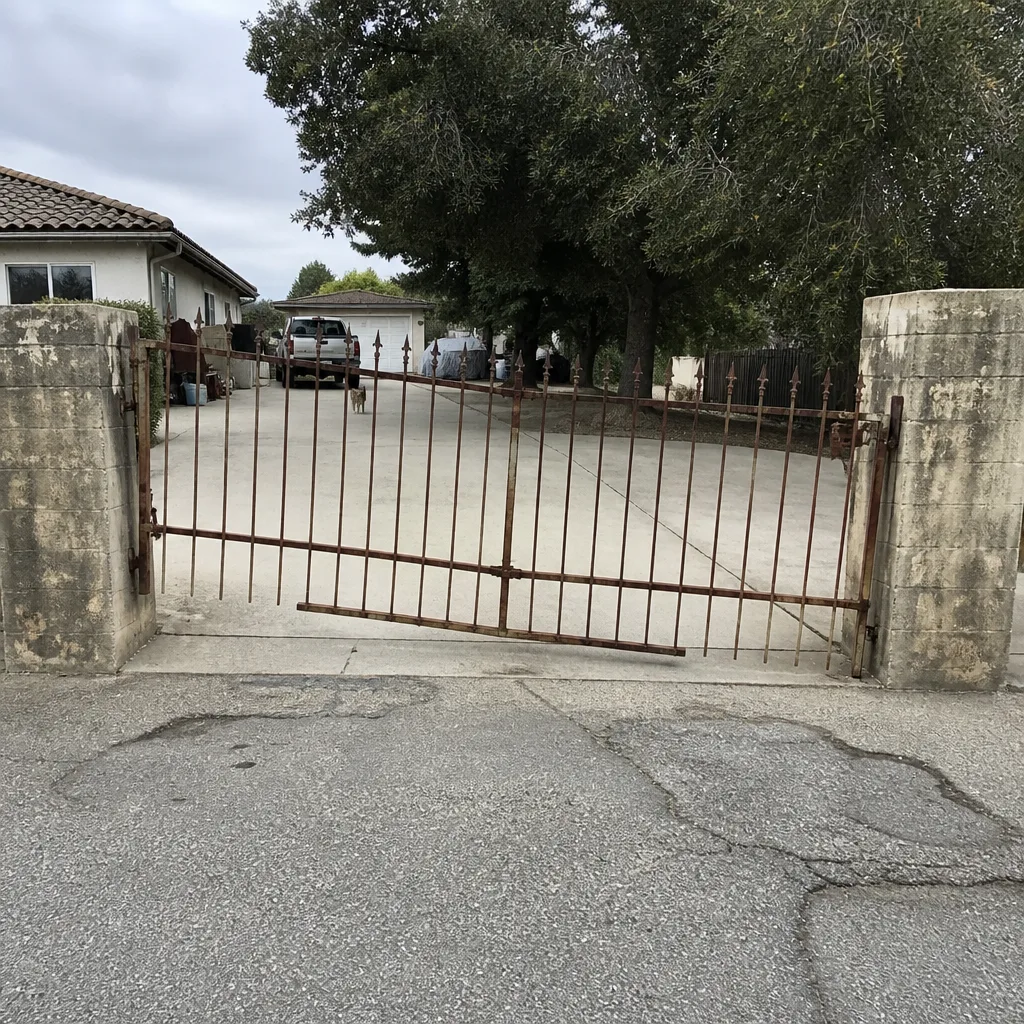 Before
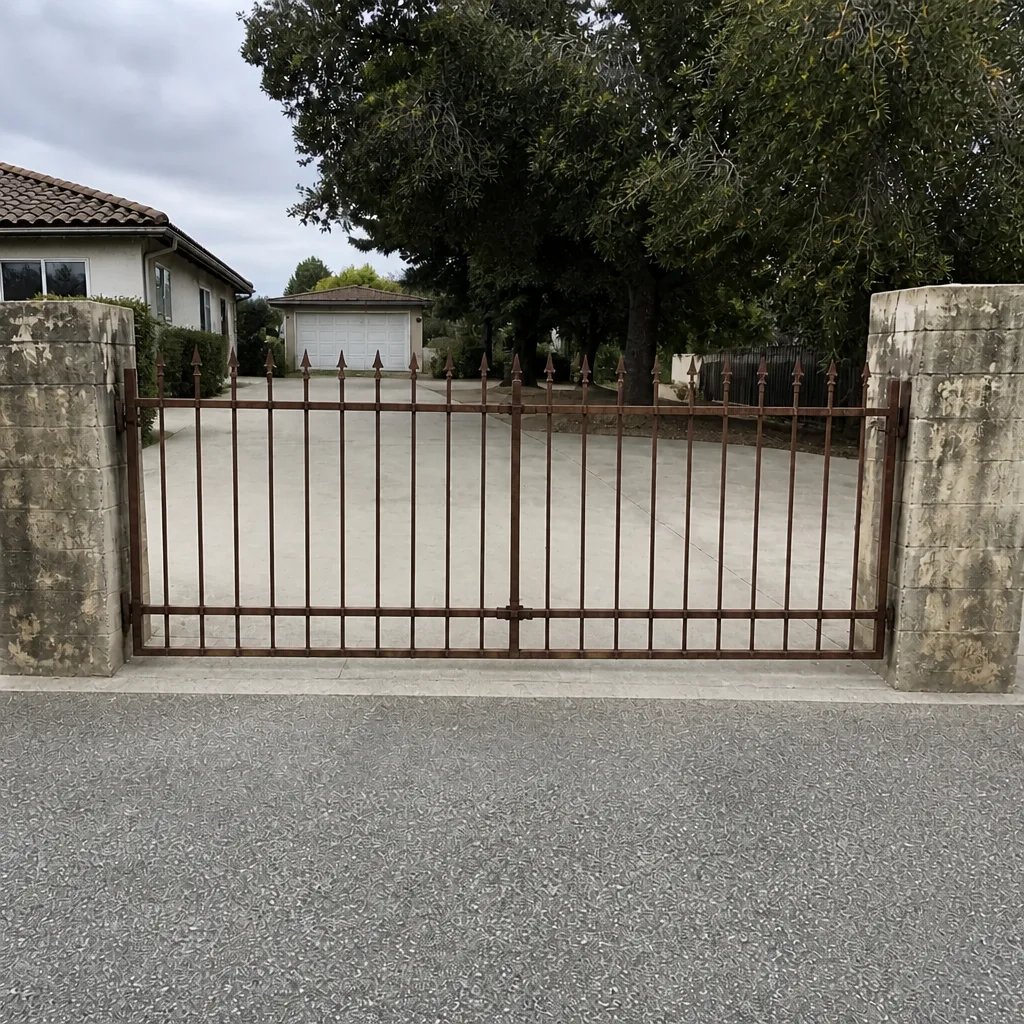 After
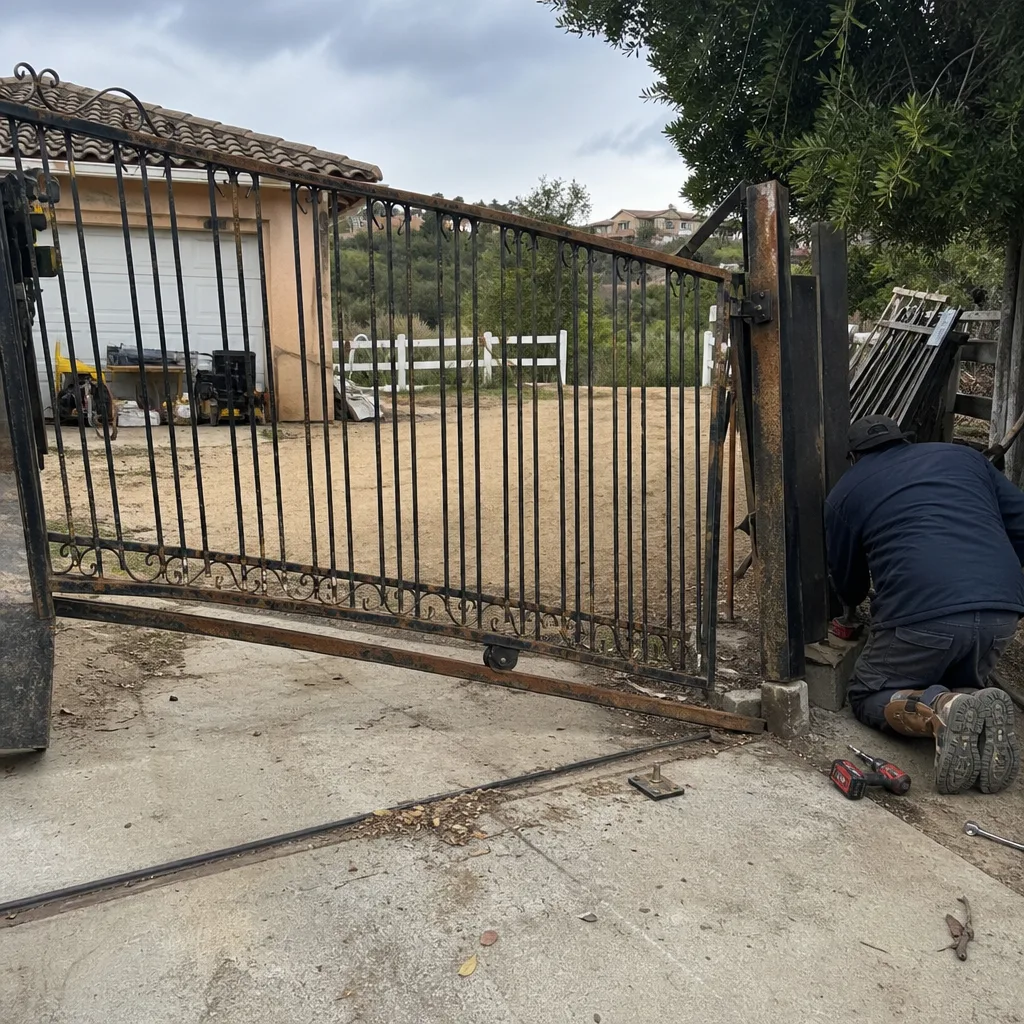 Before
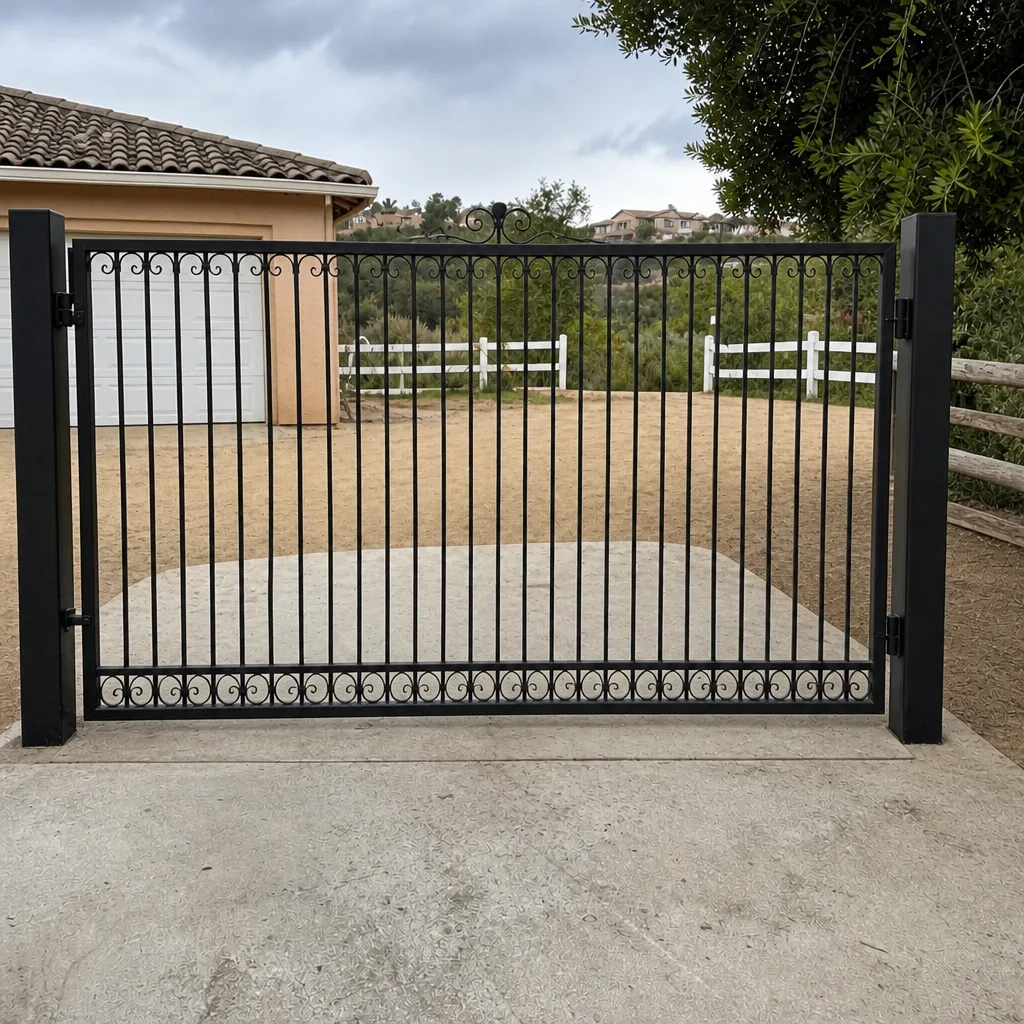 After
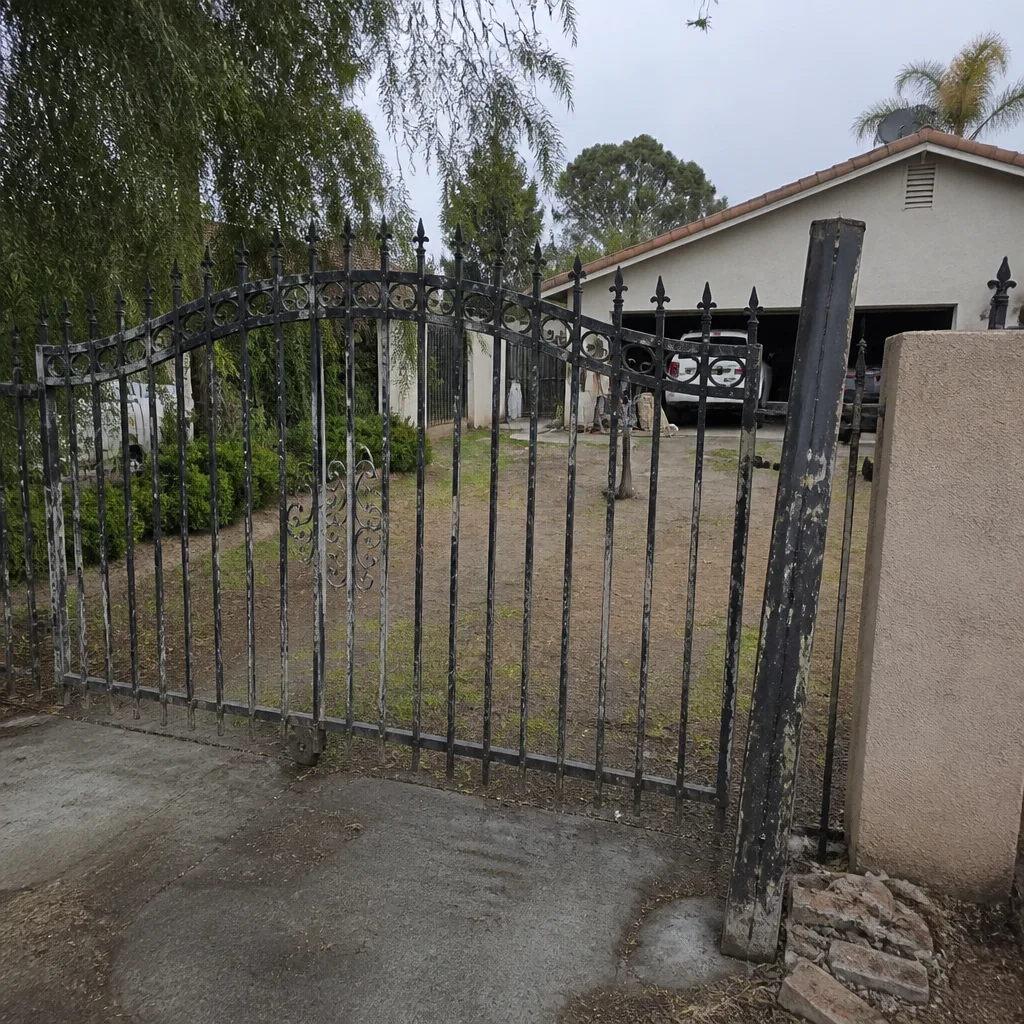 Before
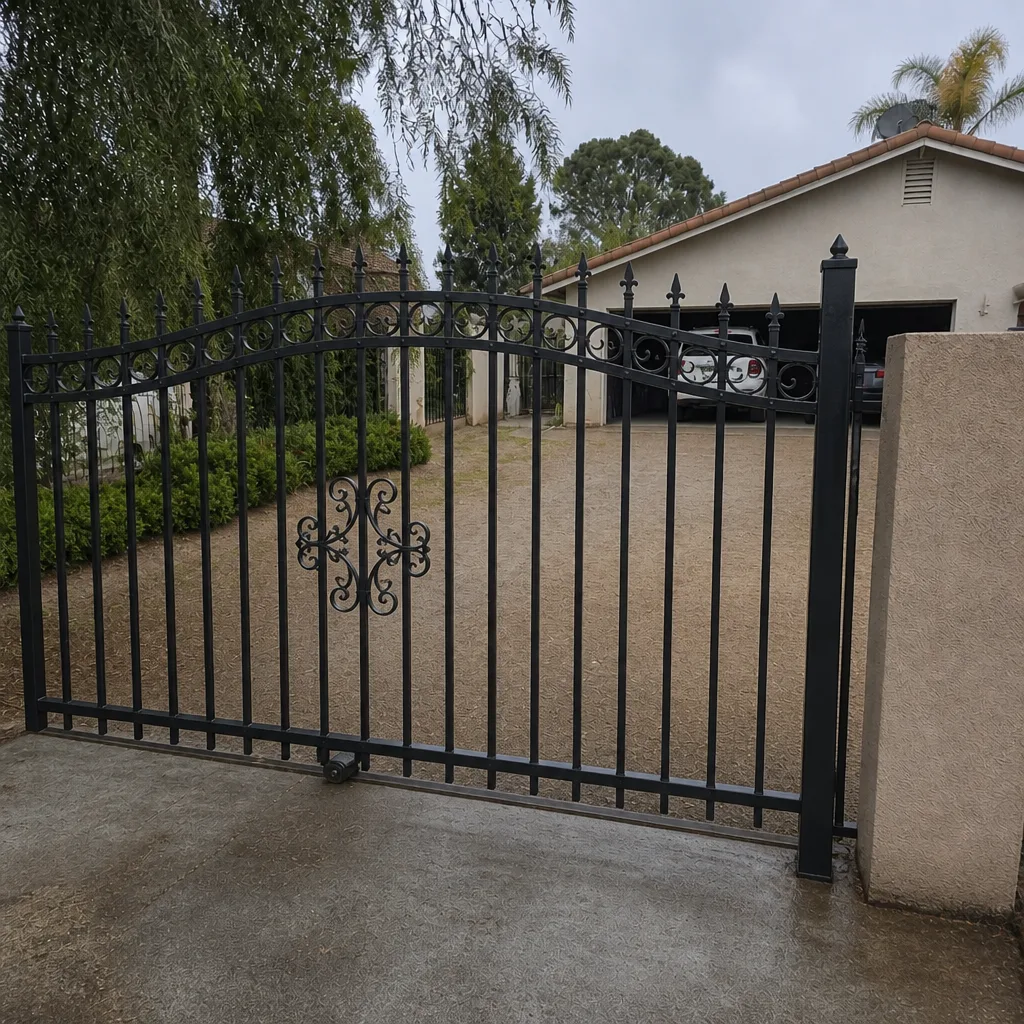 After
Frequently Asked Questions
Gate repair in Temecula typically runs from $150 for a simple limit-switch or photo-eye adjustment up to $1,800 or more for a full operator replacement, with most component-level repairs like gearbox replacement, capacitor replacement, or control-board repairs falling in the $300 to $900 range. The exact price depends on your gate type, your operator brand, and which components have failed. The written estimate sets the final price before any work begins. Call (877) 358-4544 for a free estimate.
In most cases, yes. Same-day dispatch is available Sunday through Friday from 7am to 7pm. A call outside those hours is booked into the next opening. Call (877) 358-4544 and describe what the gate is doing – the more specific you are about the symptom, the better we can prepare.
A gate that’s slow only on opening usually has a mechanical or power problem – a failing capacitor, a slipping belt, or low voltage at the operator. A gate that’s slow only on closing usually has a safety-sensor issue that’s telling the control board to close cautiously – a partially blocked photo-eye or an intermittent safety-edge contact. The two symptoms point to different repairs.
Yes. We service, repair, and replace components across LiftMaster, FAAC, BFT, Linear, Viking, Ghost Controls, DoorKing, Elite, and Mighty Mule systems. We’re brand-trained across competing manufacturers, so the recommendation is always based on what’s already installed at your property – not on what we happen to stock.
It depends on where the grinding is coming from. Drive-assembly grinding is urgent and should be addressed within days. Hinge grinding needs lubrication now and monitoring afterward. Wheel-carrier grinding on a slide gate needs the track cleaned first, then wheel replacement if the noise persists. The listening test in this guide will tell you which one you’re hearing.
Power blinks and outages often reset control boards to default parameters. That can change limit settings, dwell times, and safety configurations. After a power event, check that the gate still stops where it should and still reverses when the photo-eye is blocked. If settings have reset, a board reconfiguration is usually all that’s needed.
The Bottom Line
A gate that misbehaves is telling you something specific. The twelve behaviors in this guide map to predictable failures in the drive system, the control board, the safety sensors, or the mechanical hardware like hinges and wheel carriers. Learn to hear what your gate is saying, and you’ll avoid both panic and guesswork. Temecula’s climate – the dry heat, the decomposed granite dust, the sunlight on operator housings – accelerates certain failures in ways a generalist won’t recognize. When the signs point to a component you can’t service safely, call a specialist who works on the system you already have.
Written by the team at Gate Repair Temecula, serving Temecula since 2016.