
Last updated November 4, 2026
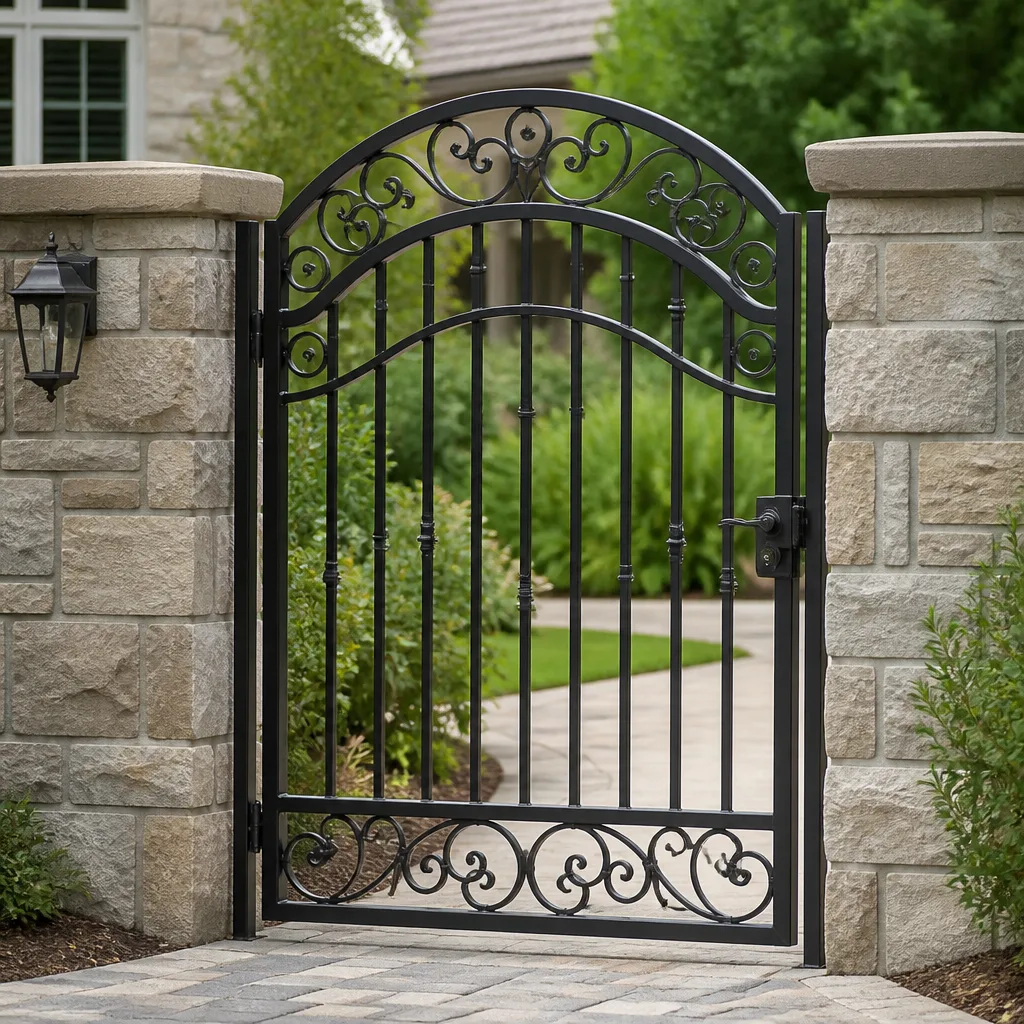 Wrought iron
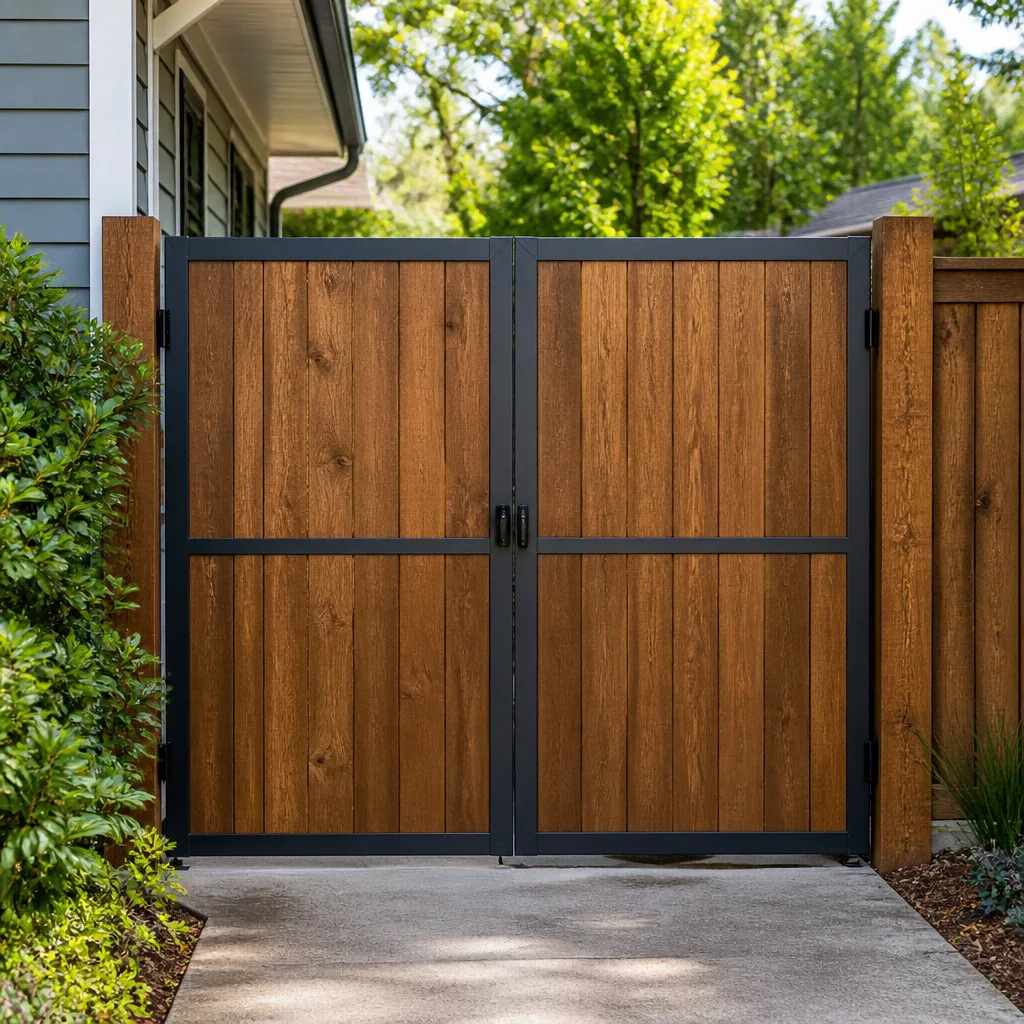 Wood & steel frame
 Farm & ranch
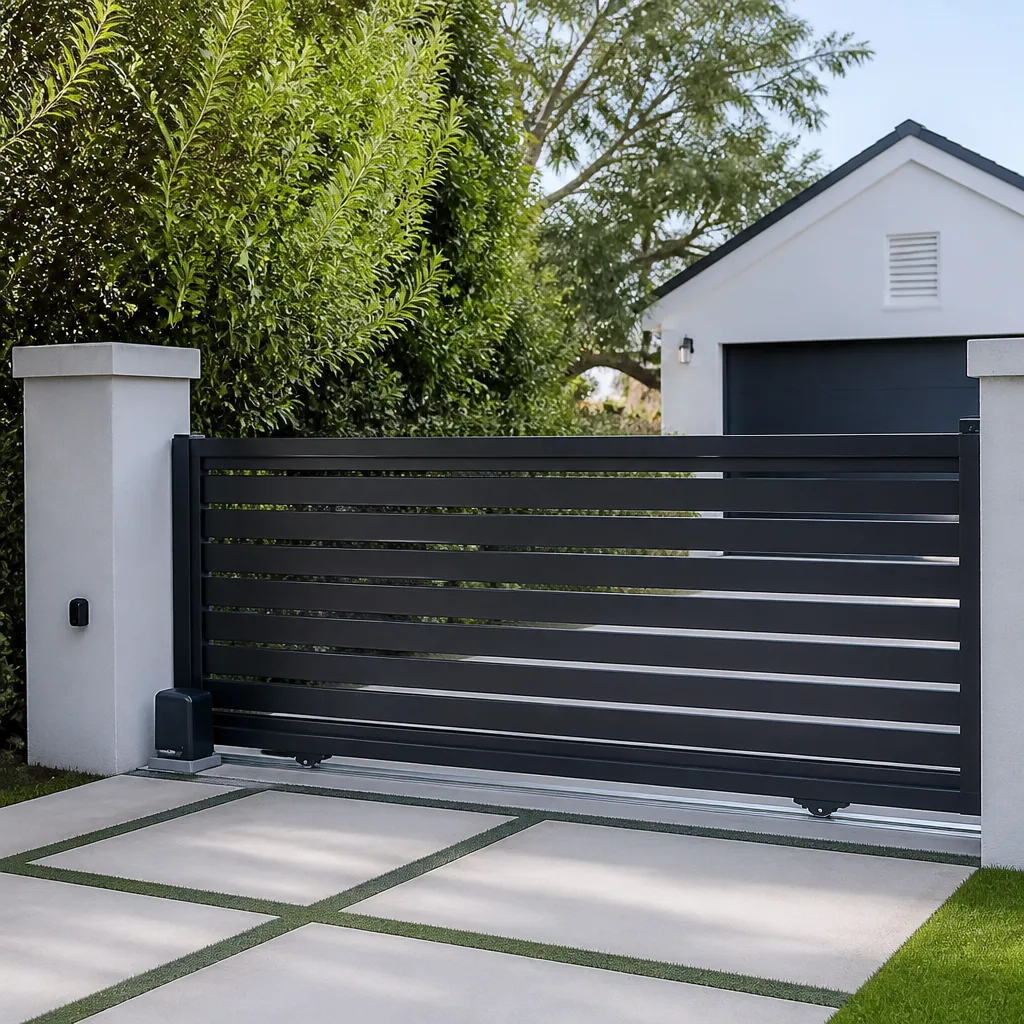 Sliding driveway gates
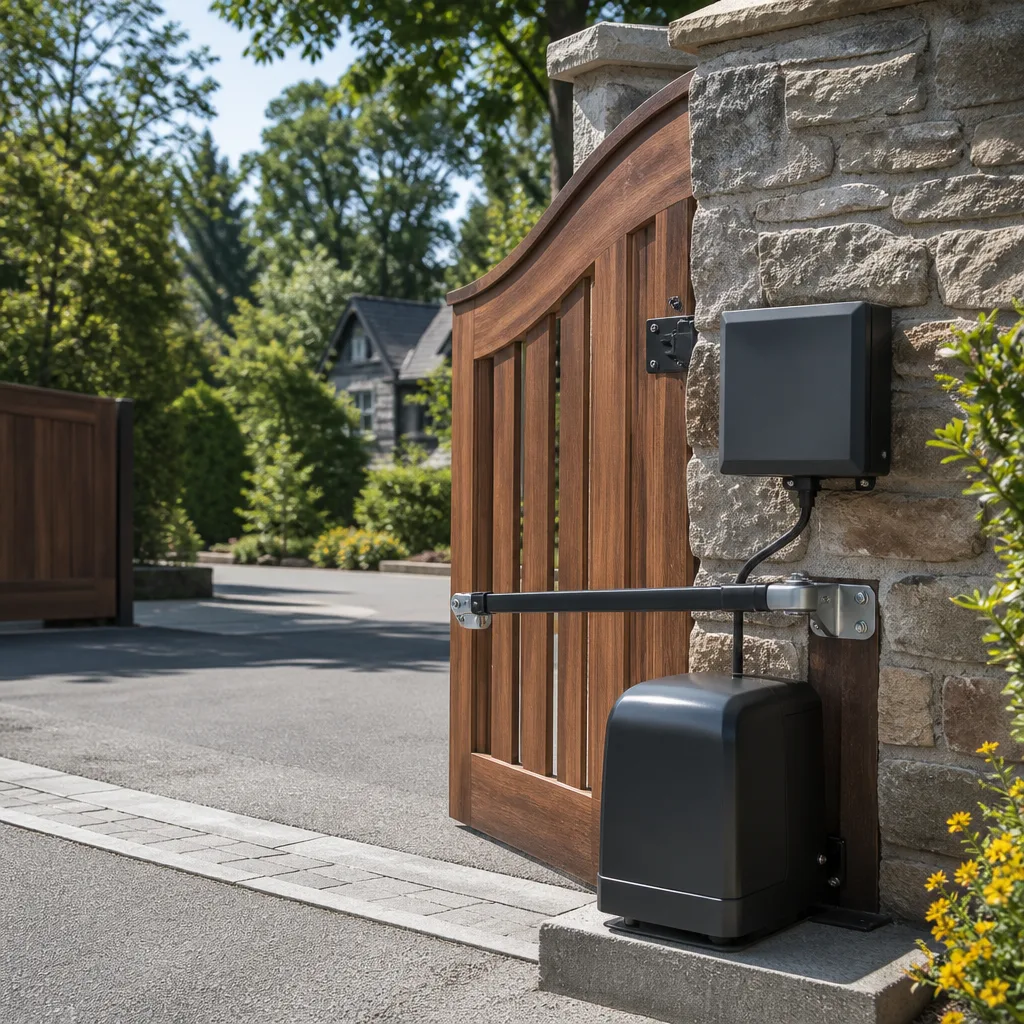 LiftMaster operators
Free on-site gate assessment - hinges, posts, and your LiftMaster or Nice gate operator checked before anything is quoted
The assessment is free and the quote is the invoice.
Get your free estimateSeasonal Gate Repair Care for Temecula: Year-Round Homeowner’s Guide
The gate failures that spike in Temecula every October aren’t caused by October. They’re caused by what August and September did to the operator’s capacitor, the ground wire insulation, and the lubricant viscosity while nobody was looking. This guide walks through the four mechanical stress phases Temecula’s Mediterranean semi-arid climate creates each year, and what you can do in each one to keep your gate running instead of calling us in a panic at 7am. We’ll cover what to check by season, what to ignore, and when a specialist needs to step in. Because a gate that works is a background detail. A gate that fails becomes the first thing you think about every time you leave the house.
Quick Answer
Temecula’s seasonal gate care breaks into four phases: spring footing and ground-operator checks after rain, summer thermal protection for control boards and batteries, a fall pre-winter inspection that catches most failures before they strand you, and winter attention to rare freeze events and Santa Ana wind hardware loading. The single highest-value action is a two-hour fall inspection covering hinges, operator wiring, safety sensors, and battery health. Most seasonal gate problems develop slowly over weeks, not suddenly, so a consistent check cadence prevents the bulk of emergency calls.
Styles & brands we work with
- Wrought iron
- Wood & steel frame
- Farm & ranch
- Sliding driveway gates
- LiftMaster operators
Table of Contents
- Why Temecula’s Climate Punishes Gates Differently
- Spring (March-May): Post-Rain Soil and Footing Checks
- Summer (June-September): Thermal Load on Boards and Batteries
- Fall (October-November): The Two-Hour Pre-Winter Inspection
- Winter (December-February): Freeze Events and Santa Ana Winds
- The Under-10-Minute Post-Wind Check
- Common Mistakes to Avoid
- When to Call a Professional
- Frequently Asked Questions
- The Bottom Line
Why Temecula’s Climate Punishes Gates Differently
Temecula sits in a Mediterranean semi-arid zone, which sounds pleasant and mostly is. But “semi-arid” means the ground moves more than people expect. Clay-heavy soils swell when winter rain arrives and shrink through the dry summer. That cycle quietly works against gate posts, concrete footings, and ground-mounted operator pads. It’s not dramatic movement. It’s a few millimeters here, a slight tilt there, enough over two or three seasons to throw a gate leaf out of alignment or pinch a conduit.
Then there’s the heat. Summer temperatures routinely push into the 90s, sometimes higher. The inside of a metal operator enclosure can run 20 to 30 degrees hotter than the air around it. We’ve opened boxes in July that were hot enough to soften wire insulation. When a control board’s capacitors sit in that environment year after year, they degrade faster than manufacturers’ published life expectancies suggest. Temecula’s combination of dry heat, occasional heavy rain, and periodic Santa Ana wind events creates four distinct stress phases, and each one targets a different gate subsystem. That’s why a seasonal checklist that treats every month the same doesn’t work here.
If you’re looking for gate repair that accounts for these local conditions, the first step is understanding what your gate actually experiences. This guide lays out that understanding, season by season.
Spring (March-May): Post-Rain Soil and Footing Checks
By March, Temecula’s rainy season is winding down. That’s exactly when the ground around your gate has absorbed as much water as it’s going to get all year, and saturated soil is soft soil. A gate post set in a concrete footing that’s undersized, or a ground-mounted operator pad that’s started to settle, will show itself now. What should you check in spring? Start with the gate leaf itself. Open it fully and let go halfway. If it drifts or swings on its own, the post has likely moved out of plumb. That’s a footing issue, not a hinge issue, in most cases.
Walk around the post and look for a gap between the concrete and the surrounding soil. A crack in the footing cap, or soil that’s visibly pulling away from the concrete, means water got in and the footing shifted. For slide gates, check the track. If the gate rides up on the rail at one end or the other, the ground under the track has settled unevenly. A track that was perfectly level in October can be visibly askew by April if the substrate wasn’t compacted properly. The fix ranges from adding shims under the track to re-pouring a section of footing, depending on severity.
For automated systems, check the ground-mounted operator. If the operator pad has settled, the chain or belt that drives the gate can bind or the run can get rough. Disengage the operator and move the gate by hand. It should move smoothly with consistent resistance from end to end. Any point where it feels like it grabs or hangs is a sign the operator and gate are no longer aligned because the ground shifted under one of them. That binds the drive and destroys gears over time.
Spring is also when the weeds come up around gates and operators. Overgrown vegetation traps moisture against the bottom rail of a gate or against the operator enclosure. Clear it out. Keep at least six inches of clearance around the operator and the gate’s bottom edge clear of grass and weeds. A weed trimmer right against the gate can scar the powder coating and open a path for rust in Temecula’s dry season, so use a hand tool near metal surfaces.
Summer (June-September): Thermal Load on Boards and Batteries
Summer is when automatic gates start randomly refusing to open, or open then immediately reverse, or set off the alarm on the keypad and do nothing. The cause in Temecula’s heat is usually thermal, but not in the way people think. The motor isn’t overheating. The control board is. A control board has capacitors and integrated circuits that age according to temperature exposure. The hotter the ambient temperature, the faster the heat-driven degradation. Inside a sealed metal enclosure, that thermal load compounds.
When a control board approaches a thermal failure point, the symptoms often show up at the hottest point of the day, then disappear after sundown. This is a reliable diagnostic signal. A gate that only misbehaves in the late afternoon and works fine at night and in the morning has a heat-related board issue, not a mechanical problem. The underlying cause can be poor ventilation in the operator enclosure, a failed cooling fan if one was installed, or simply a board that’s reached the end of its service life and needs replacement. At that point the only real fix is a new board.
Battery backups suffer in the heat too. Most gate systems use sealed lead-acid or lithium batteries in the operator. When temperatures stay high, chemical aging accelerates and capacity drops. A battery backup that would hold the gate running through a full day of power outage in January might only hold an hour after three Temecula summers. Test battery backup seasonally. Disconnect the main power to the operator, or throw the dedicated breaker, and run the gate. If it doesn’t operate at full speed, or doesn’t operate at all, the battery is beyond economic repair.
You can reduce thermal stress by shading the operator enclosure. A simple shade structure that blocks direct sun between noon and 4pm during summer months will measurably lower peak internal temperatures. Just don’t enclose the operator: it needs airflow. If you’re replacing a board, ask about one rated for higher ambient temperatures. When we diagnose a thermal board issue for a customer, we explain that the repair fixes the symptom, but shading or ventilation fixes the cause.
Fall (October-November): The Two-Hour Pre-Winter Inspection
Fall is the highest service call season for gate repair in Temecula. It’s not because fall is hard on gates. It’s because the accumulated summer damage finally manifests when the first cold nights arrive and people start leaving for work in the dark. A gate that was already struggling in September never gets better on its own by October. The single best thing you can do for your gate all year is a two-hour fall inspection. Done right, it prevents a large share of the emergency calls that dominate October and November for us.
Here’s the two-hour inspection, in the order we do it for our own customers.
- Lubricate all hinge points and the drive chain or belt. Use a dry graphite or lithium spray lubricant on hinges, and a manufacturer-appropriate lubricant on the drive chain. Don’t use WD-40. It displaces the heavier grease and leaves the chain under-lubricated within a week. This step takes 20 minutes, including cleanup.
- Check and tighten all fasteners. Every hinge bolt, operator mounting bolt, and track bracket. Temecula’s heat cycling works bolts loose over the summer. A loose hinge bolt lets the gate sag and eventually binds the operator. This step takes 15 minutes.
- Inspect wiring at the operator and at the keypad. Look for insulation that’s cracking, discolored, or stiff. Make sure all wire nuts and terminal screws are tight. A loose neutral connection is the second most common cause of intermittent gate failure after heat-related board issues. This takes 15 minutes.
- Clean and test the safety sensors. Wipe the photo-eye lenses on both sides. Run the gate closed and wave a hand in front of the beam. The gate should stop and reverse immediately. If it doesn’t, that’s a code violation and a safety hazard, not just an inconvenience. This takes 10 minutes.
- Check battery backup under load. Kill the main power and run the gate through a full open-close cycle. Weak or no battery performance means a replacement. This step takes 10 minutes.
- Examine the gate leaf and track for wear. Any crack in the metal, rust starting at a weld, or a worn drive wheel on a slide gate should be addressed before winter’s heavier use cycle kicks in. This takes 20 minutes.
That’s under two hours, and every step prevents a specific type of fall failure we see in Temecula. The fall inspection pairs naturally with electric gate repair, especially if you find anything in steps two through five that looks marginal. Better to address a stiff hinge in October than replace a burned-out operator motor in December because the gate was binding for two months.
See the difference
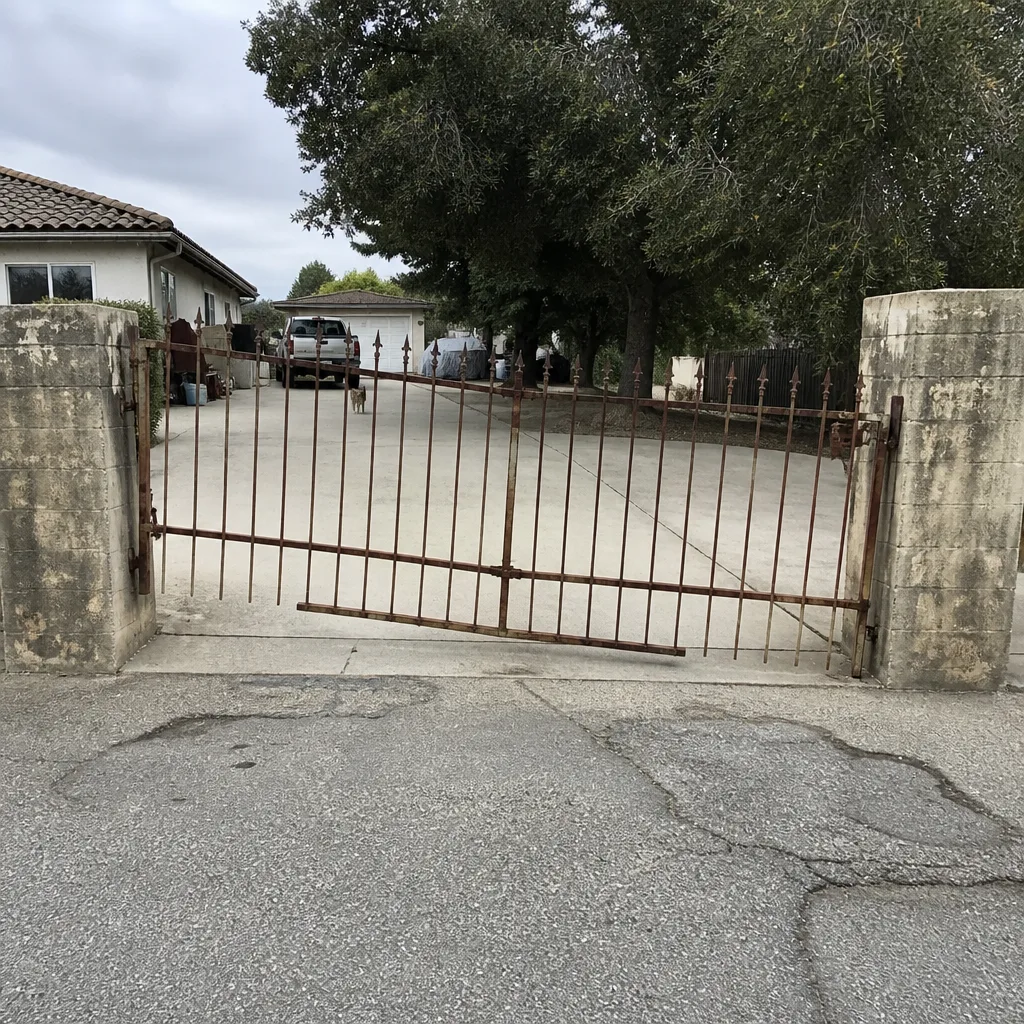 Before
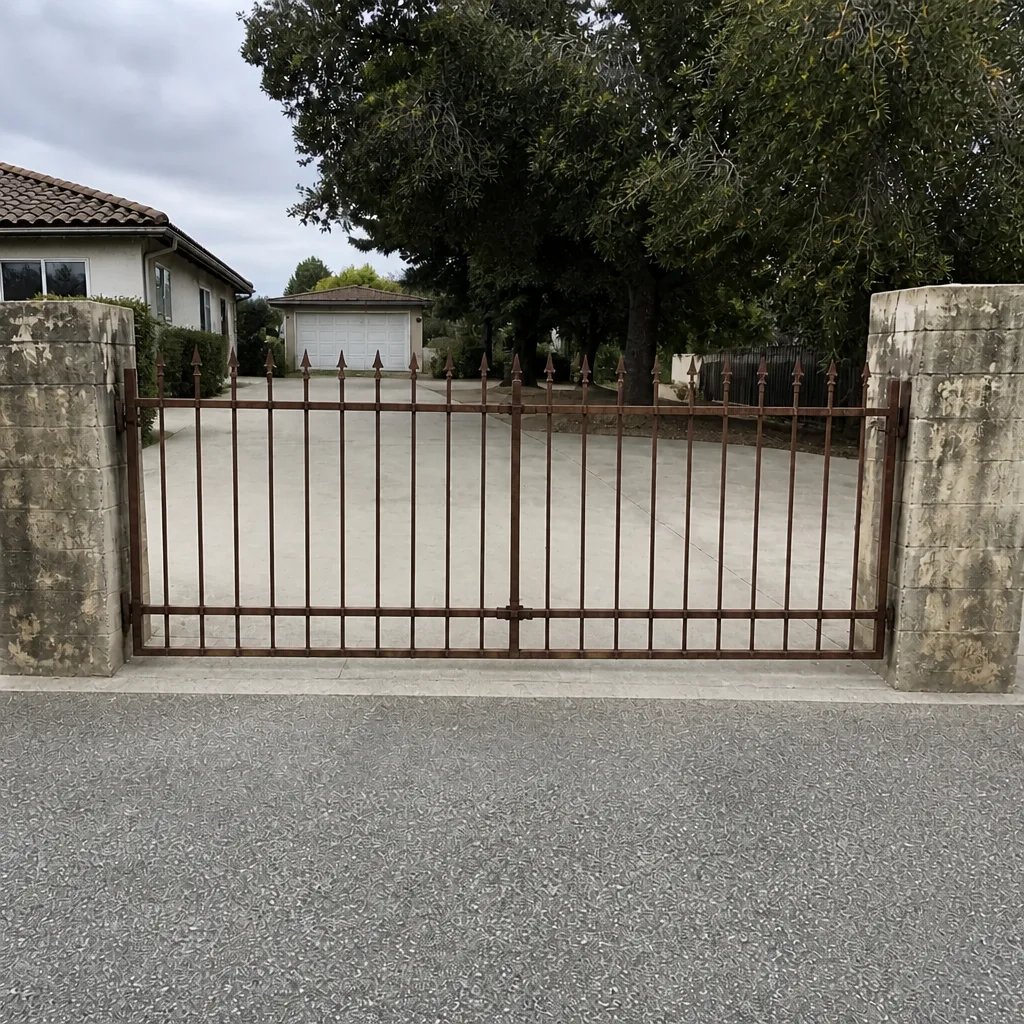 After
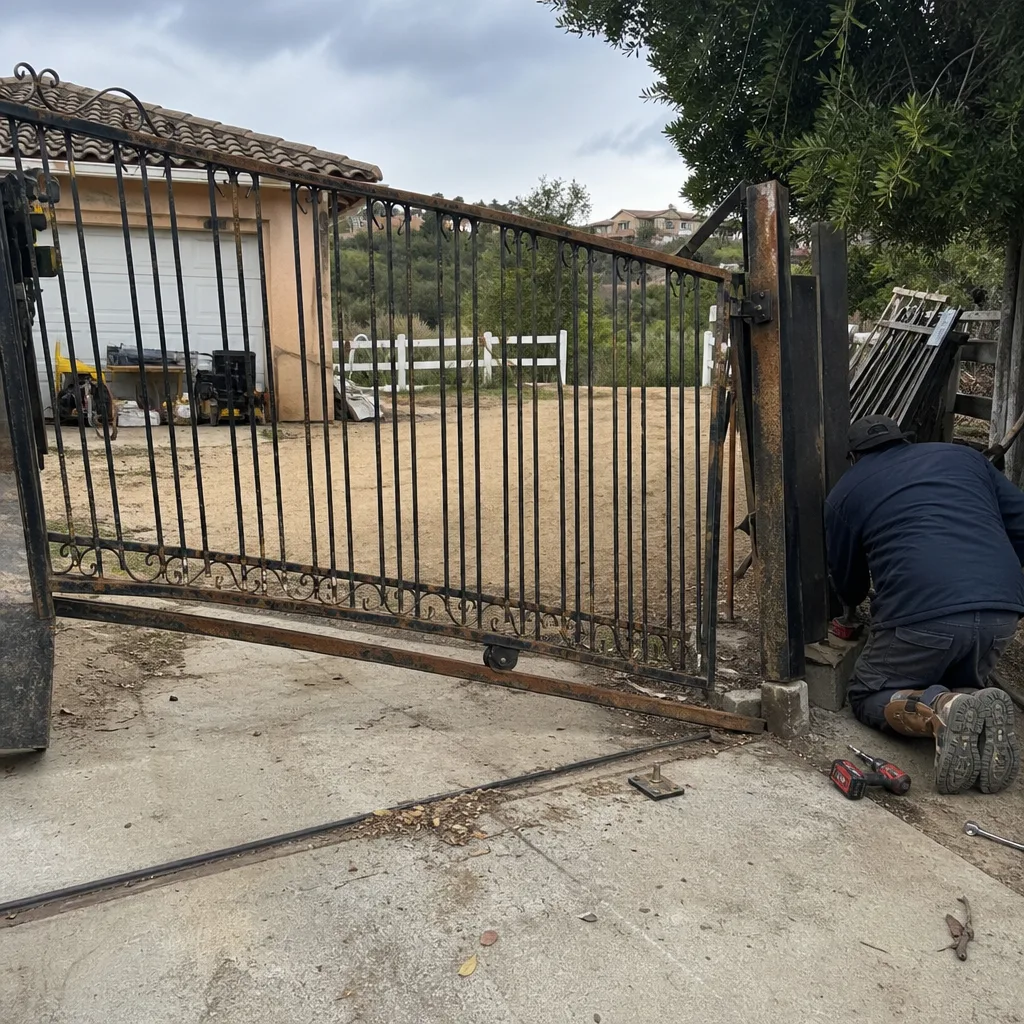 Before
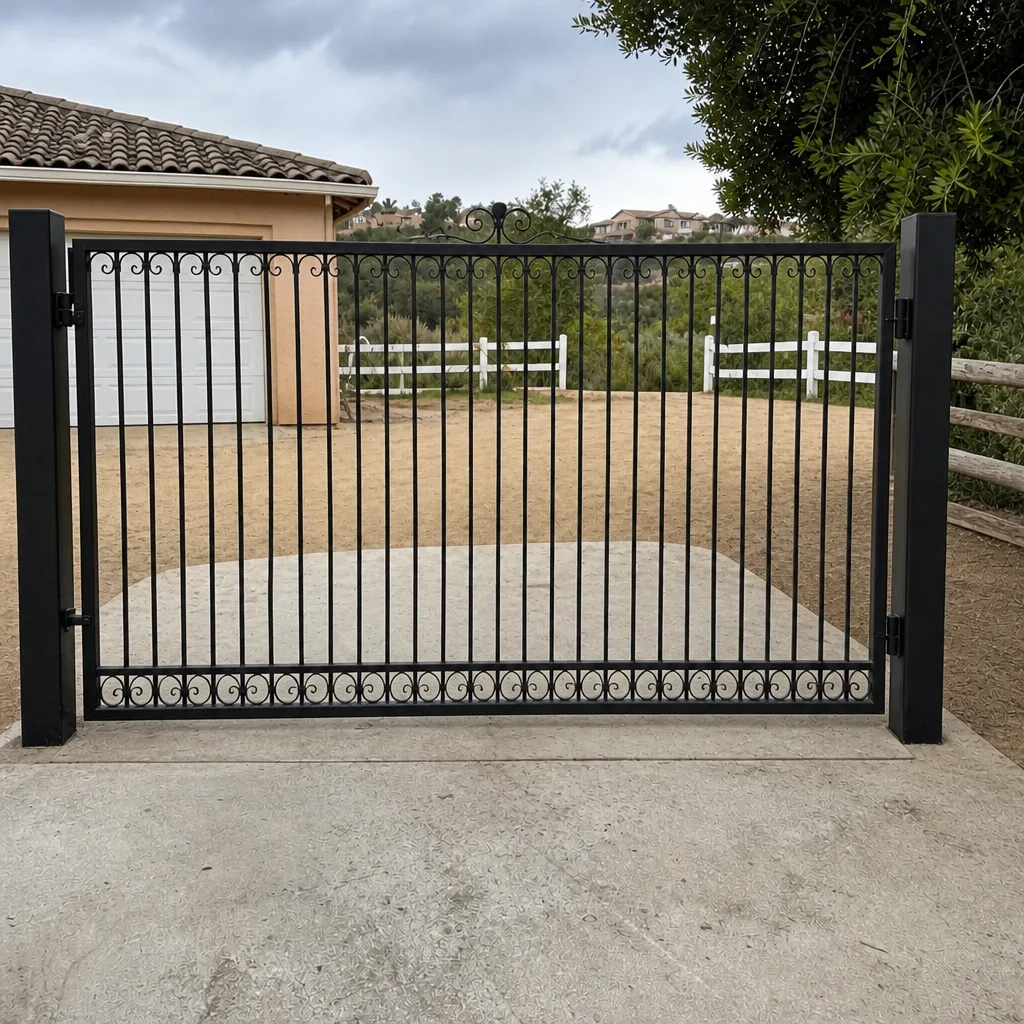 After
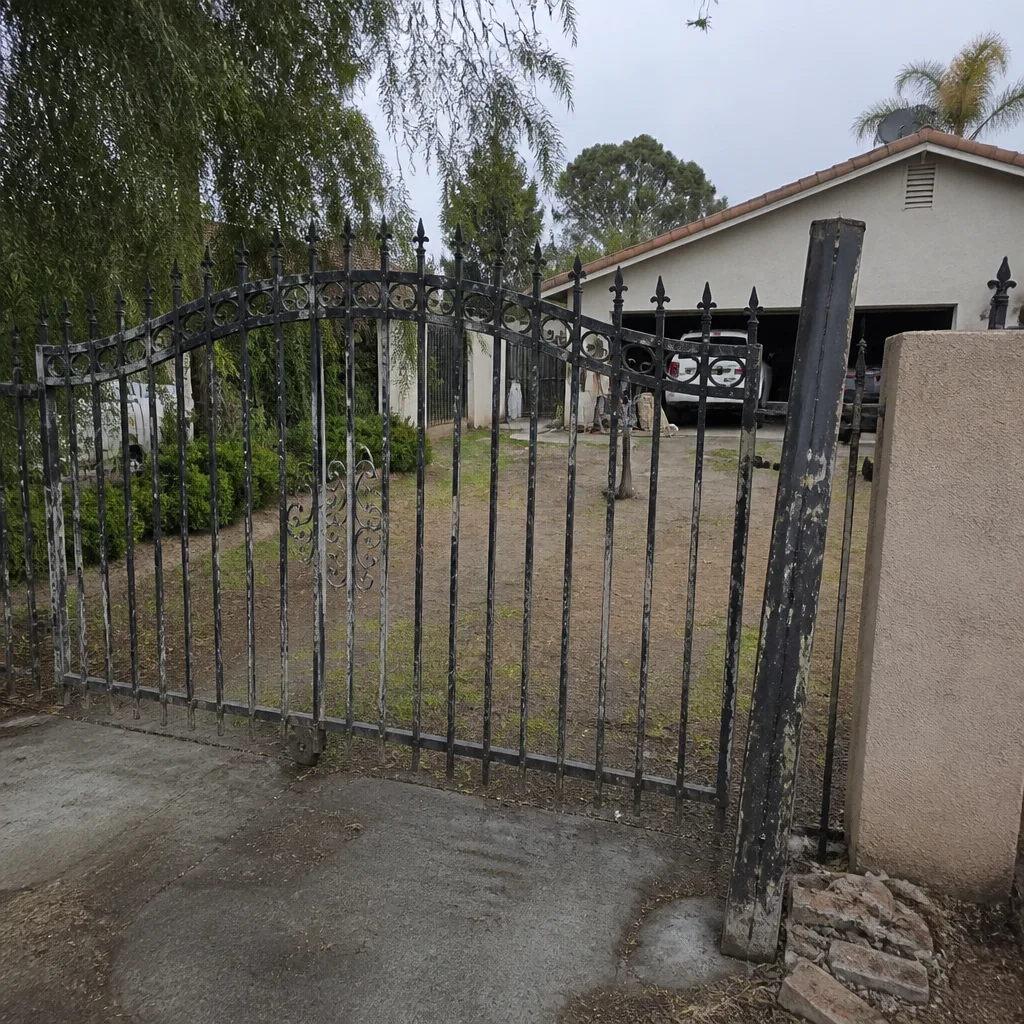 Before
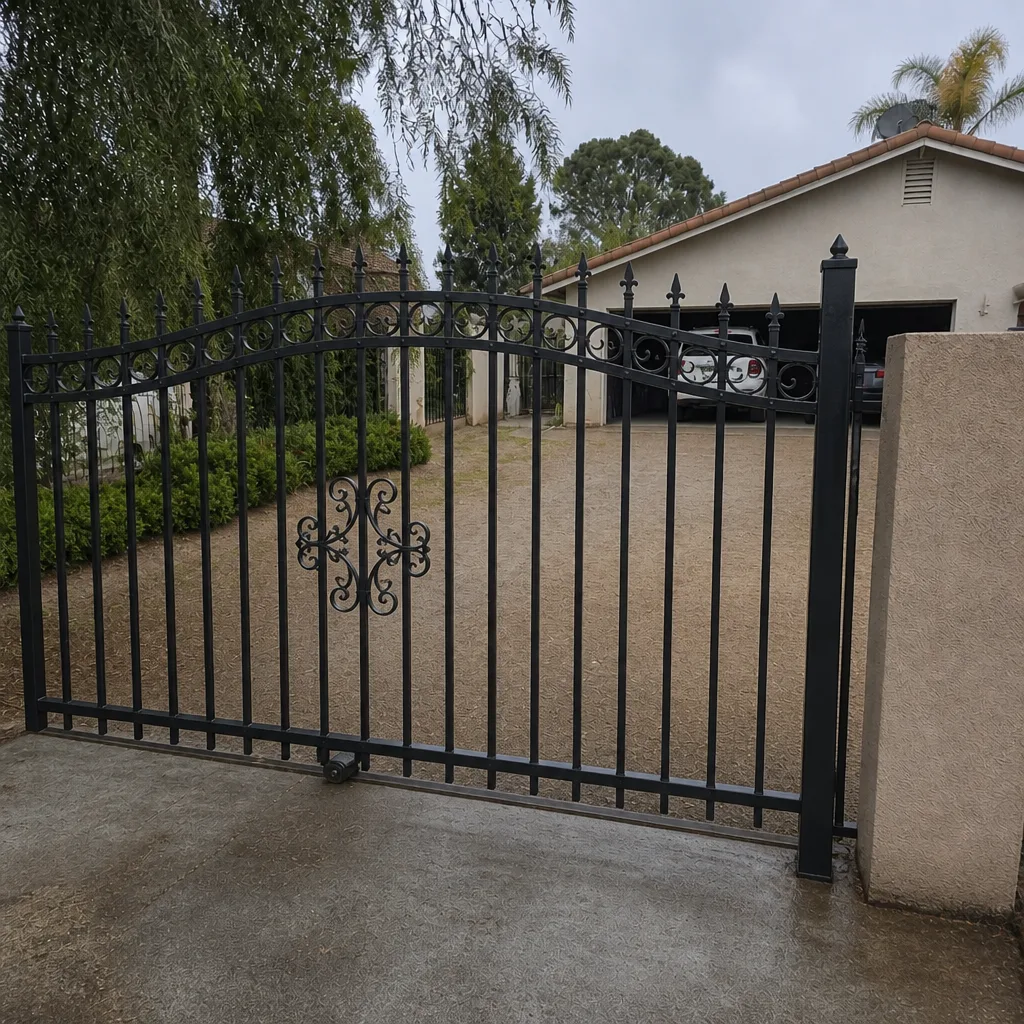 After
Winter (December-February): Freeze Events and Santa Ana Winds
Temecula’s winters are mild, but they’re not freeze-free. Overnight lows occasionally dip below 32 degrees in December and January, particularly in the valley areas and creekside properties. For a hydraulic operator, a freeze event thickens the hydraulic fluid, which makes the gate move slowly until the fluid warms. This is normal and usually harmless. But it exposes a marginal pump: if the pump was already weak, the added resistance of cold fluid can trip the overload protection and stall the gate. A properly maintained hydraulic system handles a mild Temecula freeze without issue. A neglected one doesn’t.
Padlocks and keypads are the other freeze victims. A padlock that gets wet during a winter rain and then freezes for a few hours can seize up completely. A keypad with a cracked membrane lets water into the electronics; one hard freeze after that and the keypad may be done. Inspect padlocks and keypads in December. Replace any padlock that’s hard to turn. Put a weather cover over any keypad that’s exposed to direct rain. These are small, cheap fixes that prevent a larger winter service call.
Santa Ana winds are the more significant winter factor in Temecula. They typically arrive 10 to 15 times a year, most often between October and February. A Santa Ana event can push sustained winds of 30 to 40 miles per hour with gusts considerably higher, and that places a continuous load on gate hardware that it doesn’t experience at any other time. A heavy gate leaf acts like a sail. The wind pushes against the full surface area, and that force concentrates at the hinges, the operator arm, and the track wheels. Any existing weakness in any of those components will make itself known during a Santa Ana event.
The Under-10-Minute Post-Wind Check
After a strong Santa Ana event, take ten minutes to check the gate before the next use. Here’s the sequence.
- Open and close the gate fully, twice. Listen for any new grinding, clicking, or squealing sound. Any new sound means a hardware shift. This takes two minutes.
- Look at all four hinge points. Check for gaps between the hinge pin and barrel, or for any visible metal fatigue at the weld points. This takes two minutes.
- Check the operator arm connection. For swing gates, look at where the arm connects to the gate leaf. Any looseness or play there means the wind pulled something out of alignment. This takes two minutes.
- Look at the gate gap. The gap at the latch end should be even from top to bottom. If it’s wider at the top, the post moved. This takes one minute.
- Run the safety sensors through a test. The same wave test from the fall inspection. Wind can knock a sensor mount slightly out of alignment. This takes two minutes.
If anything fails this check, the problem won’t fix itself. It will get worse until it becomes a full failure. At that point, calling for gate repair sooner rather than later usually means a smaller repair bill.
Common Mistakes to Avoid
- Lubricating with WD-40. It’s a solvent first and a lubricant second. It strips the existing grease and leaves metal surfaces with almost no protection, which accelerates wear in Temecula’s dry, dusty summer conditions. Use a proper dry or lithium lubricant.
- Ignoring a slow gate in summer. A gate that runs slower when it’s hot is giving you an early warning. Wait long enough and that heat-degraded board or weak battery strands you. Slow movement in summer is a diagnostic signal, not a personality quirk.
- Closing a gate against a binding post. If the gate resists at one point in its travel and you just push a little harder or hold the button a little longer to power through it, you’re adding load the operator wasn’t designed for. That single action does more cumulative damage than a month of normal use.
- Skipping the fall inspection because the gate “seems fine.” The majority of October and November service calls in Temecula come from gates that seemed fine in September. The point of the inspection is to catch what hasn’t failed yet.
- Planting irrigation too close to the gate post. In Temecula’s clay soil, a sprinkler that soaks the ground next to a gate post every other day creates localized settling that the rest of the ground doesn’t experience. Move irrigation heads at least three feet from any post or footing.
- Testing battery backup by unplugging the operator for thirty seconds and calling it good. A failing battery often holds a surface charge for a short run and then collapses under real load. Run the gate through multiple full cycles with main power off to get an honest reading.
- Replacing a board without fixing the thermal cause. In Temecula, a new control board in an unshaded, unventilated enclosure in full July sun is just the next board to fail. Address the enclosure and shading as part of the replacement.
When to Call a Professional
There’s a line between a seasonal check you can do yourself and a diagnosis that needs a specialist. When the gate’s safety sensors stop reversing properly, the operator motor strains and overheats, a control board shows intermittent failures, or a gate post is visibly out of plumb, that’s past the DIY point. So is any electrical work inside the operator enclosure: the low-voltage side is safe to inspect, but a live wire, a burned terminal, or a ground fault is a job for someone who does this daily, because you can’t see a bad connection that’s hidden behind a working one. We work on the system you already have, which includes DoorKing and Mighty Mule residential operators through commercial-grade Elite and LiftMaster units. Gate Repair Temecula offers free estimates in Temecula, call (877) 358-4544. We answer 24/7. Fast dispatch from 7am to 7pm, Sunday through Friday.
We’ve been serving Temecula property owners since 2016, and we’ve seen how the local climate creates problems that a gate in San Diego or Riverside never deals with. The heat, the clay soil, and the Santa Ana cycles all show up in the repair patterns. If your gate has an issue this season, or if you want a professional fall inspection instead of doing it yourself, one call gets you a gate specialist at your property.
Frequently Asked Questions
Inspect your gate seasonally, four times a year, with the deepest inspection in the fall. Temecula’s climate creates distinct stress patterns in each season, so a quarterly check catches each type of problem before it compounds. A ten-minute visual check twice a year is not enough for automated systems, especially with the summer heat load on boards and winter wind loading on hardware.
Yes, primarily through thermal stress on control boards and battery backups inside the operator enclosure. Sustained summer temperatures mean the inside of the enclosure runs significantly hotter than outside, accelerating capacitor and integrated circuit aging. A gate that fails only on hot afternoons is showing classic heat-related board degradation. Call (877) 358-4544 for an exact quote, estimates are free.
Run the two-hour fall inspection before you leave, or have a professional do it. Specifically check the battery backup under full load, confirm the safety sensors reverse properly, and lubricate all hinges and drive components. Temecula’s Santa Ana winds can arrive while you’re away, and a gate that fails in a wind event can leave the property unsecured for days.
Yes, and the damage usually appears at the hinge points, the operator arm connection, and the track wheels, because those are the points where the full wind load on the gate leaf concentrates. A heavy swing gate acts like a sail in sustained 30 to 40 mile per hour wind. After any strong wind event, run the ten-minute post-wind check described above, and call for service if anything looks or sounds different.
Typical repairs in Temecula run from roughly $150 for a minor hinge or sensor alignment to $400 to $900 for a control board replacement, and into the thousands for a full operator replacement on an automated system. The price is quoted and agreed before any work starts, and the written estimate sets the final price. Call (877) 358-4544 for an exact quote, estimates are free.
We work on the system you already have, trained across nine major gate brands including LiftMaster, FAAC, BFT, Linear, Viking, Ghost Controls, DoorKing, Elite, and Mighty Mule. That covers budget DIY residential operators through commercial-grade systems. Our diagnostic approach is brand-agnostic: we recommend the repair based on what your existing equipment needs, not on what we happen to stock.
The Bottom Line
Temecula’s four-season gate stress pattern means seasonal care is not a nice-to-have. The spring soil check, summer thermal check, fall pre-winter inspection, and winter wind and freeze attention each target a different set of potential failures. Do the four seasonal checks consistently, and most gate problems never become emergencies. Skip them, and the first sign of trouble is usually the day the gate won’t open at 7am on a Monday. For anything beyond a visual check, or when something actually fails, call a gate specialist. The estimate is free, and the price is agreed before any work starts.
Written by the team at Gate Repair Temecula, serving Temecula since 2016.