
Last updated November 4, 2026
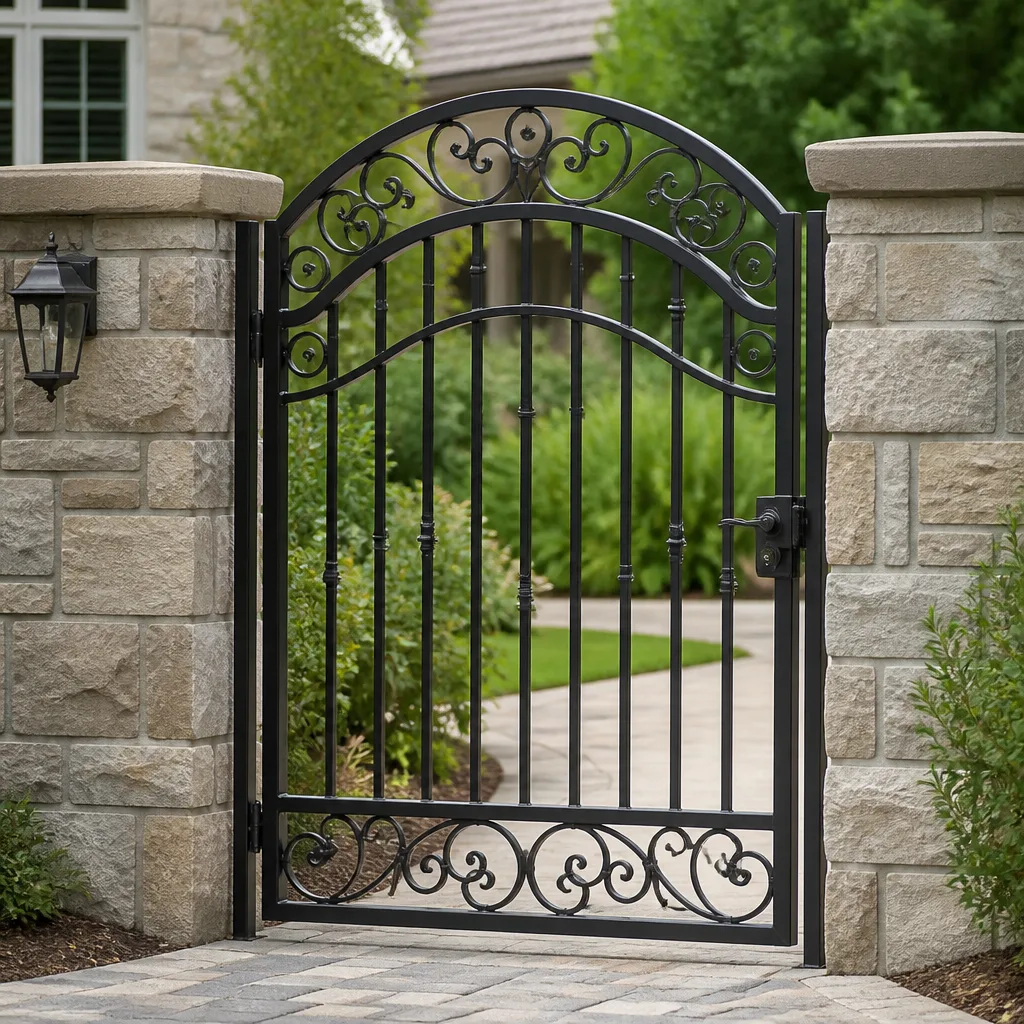 Wrought iron
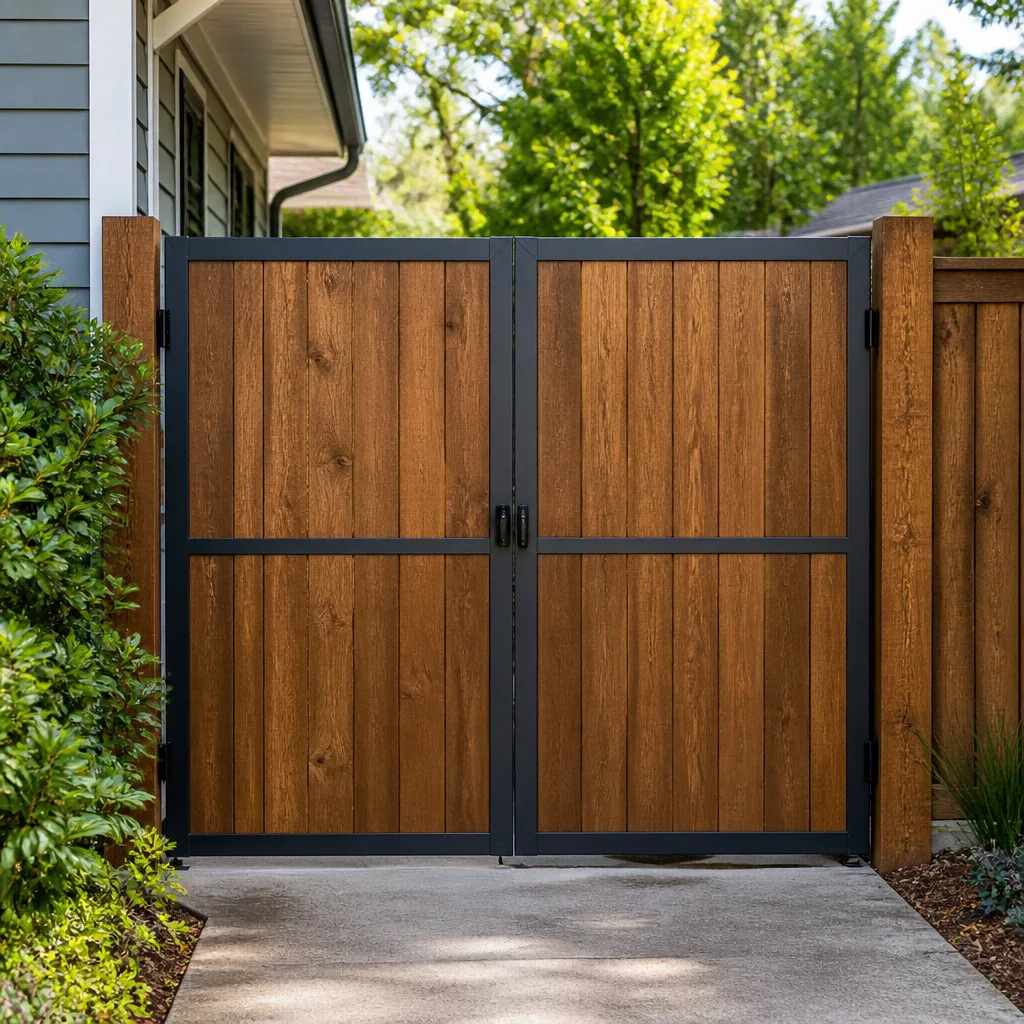 Wood & steel frame
 Farm & ranch
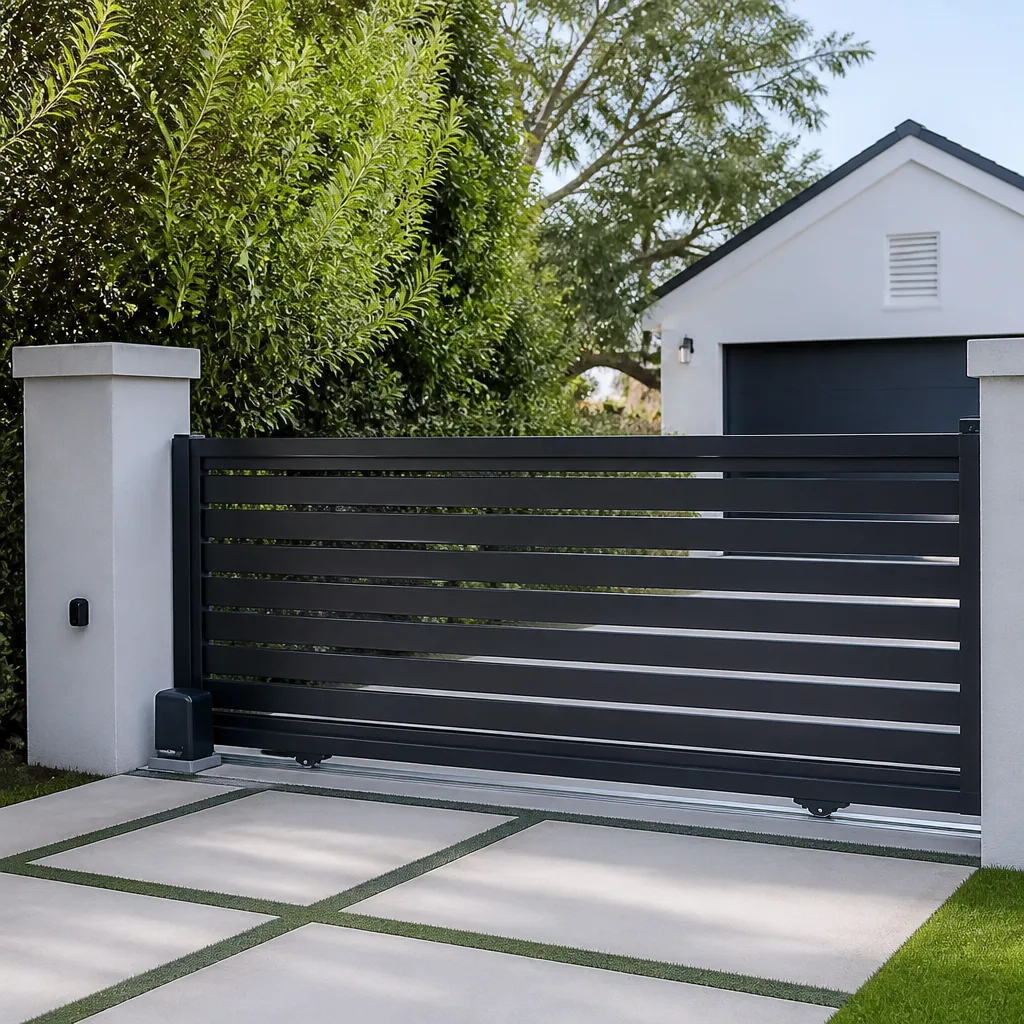 Sliding driveway gates
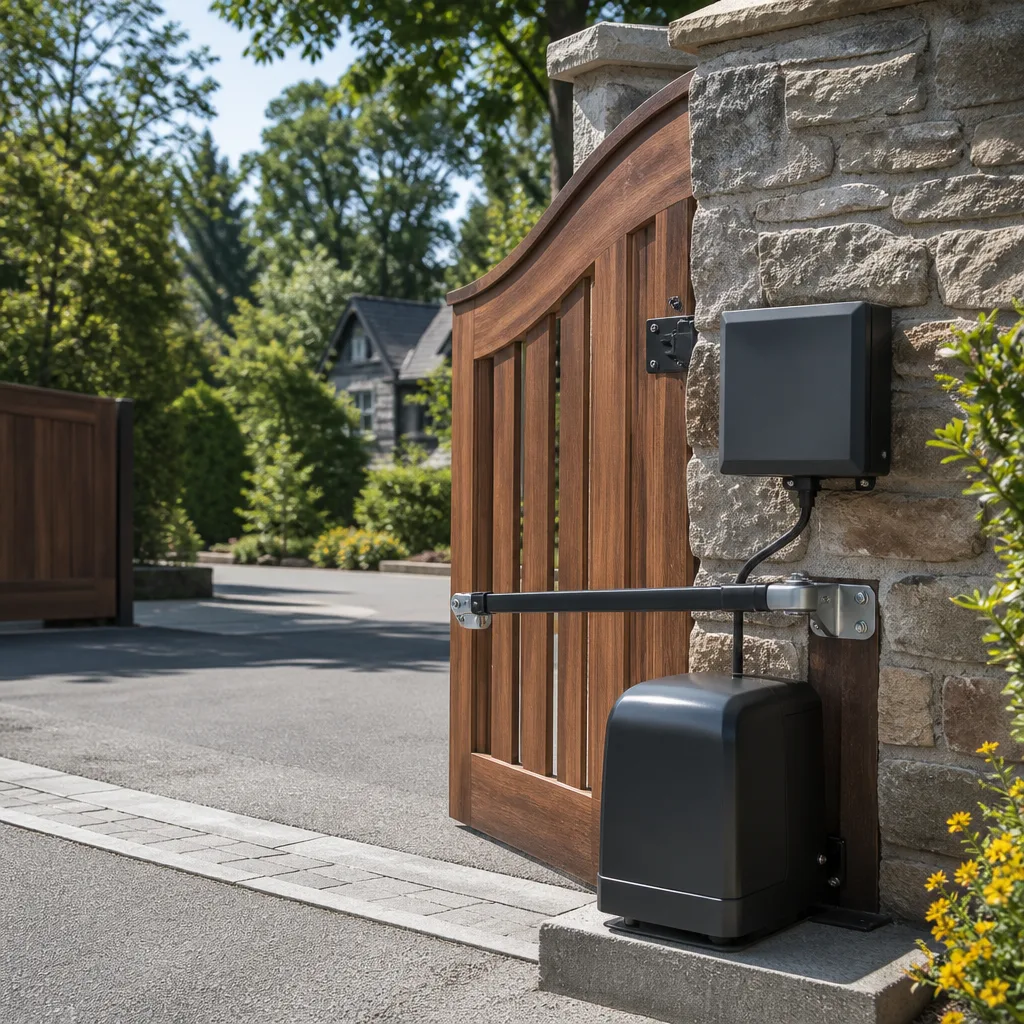 LiftMaster operators
Free on-site gate assessment - hinges, posts, and your LiftMaster or Nice gate operator checked before anything is quoted
The assessment is free and the quote is the invoice.
Get your free estimateGate Repair Maintenance Schedule: What to Do and When
If your gate technician hands you a maintenance schedule that looks identical to one they’d give a client in Seattle, they’re not maintaining your gate, they’re running through a template. Temecula puts very specific stress on gate hardware: triple-digit summer heat, fine dust that works its way into every sensor and gear, and Santa Ana winds that blast debris into chain drives and photo-eyes. This guide replaces the generic monthly checklist with a trigger-based schedule built for inland Southern California. You’ll learn exactly what to check, when to check it, and which tasks you can safely handle versus which ones need a gate specialist.
Styles & brands we work with
- Wrought iron
- Wood & steel frame
- Farm & ranch
- Sliding driveway gates
- LiftMaster operators
Quick Answer
A gate in Temecula needs a full maintenance inspection twice a year: once in early spring to prepare for summer heat, and once in late fall after Santa Ana wind season settles down. High-traffic automated gates should also hit specific service milestones by cycle count: chain lubrication every 3,000 to 5,000 open/close cycles, hinge and wheel servicing every 10,000 cycles, and control board inspection twice yearly regardless of cycle count. Most residential gates run 20 to 50 cycles a day, which means twice-a-year service is right for the typical homeowner, while commercial gates in HOAs or apartment complexes may need quarterly attention.
Table of Contents
- Why Calendar-Only Schedules Fail in Temecula
- Cycle Count Milestones That Actually Matter
- Pre-Summer Prep Checklist for Temecula Heat
- Post-Santa Ana Wind Inspection Protocol
- What Homeowners Can Do Safely
- What Requires a Trained Technician
- How to Log Maintenance for Warranty and Resale
- Choosing Lubricants and Cleaners That Survive Temecula Summers
- Common Mistakes to Avoid
- When to Call a Professional
- Frequently Asked Questions
- The Bottom Line
Why Calendar-Only Schedules Fail in Temecula
A maintenance calendar that says “lubricate in January and July” ignores how gates actually wear out. What kills gate components in Temecula is rarely the passage of time. It’s heat saturation on control boards, fine particulate loading on lubricated surfaces, and wind-driven debris intrusion. The same gate in coastal San Diego might run fine on a basic semi-annual schedule because the marine layer keeps temperatures moderate and the air cleaner. Put that identical schedule in Temecula with 95°F plus days, low humidity that accelerates lubricant evaporation, and Santa Ana wind events, and you get premature motor failure, stiff rollers, and false obstruction trips.
We build maintenance around conditions, not dates. A homeowner on a quiet cul-de-sac with a manual gate needs far less attention than an HOA entrance gate cycling 150 times a day. The schedule below works because it pairs seasonal triggers with actual usage data. If you’re looking for gate repair guidance that accounts for how your specific system operates, this is the framework we use when we inspect gates across Temecula.
Cycle Count Milestones That Actually Matter
Every automated gate has a duty cycle rating from the manufacturer. Budget operators like Ghost Controls and Mighty Mule are built for residential use, typically 20 to 40 cycles per day. Commercial operators from LiftMaster, FAAC, BFT, Linear, Viking, and DoorKing handle far more. But the manufacturer’s rating is a ceiling, not a maintenance schedule. Real maintenance is triggered by accumulated cycles.
Here’s the breakdown we recommend for Temecula’s conditions:
- Every 3,000 to 5,000 cycles: Chain drive lubrication and tension check. Dust mixed with old lubricant forms a grinding paste that stretches chains and wears sprockets faster than heat alone.
- Every 10,000 cycles: Hinge, wheel, and track service on slide gates. Bearings and wheels start showing flat spots and side play right around this count, especially on heavier iron gates common in Temecula’s older neighborhoods.
- Every 15,000 cycles: Control board inspection and capacitor testing. Heat is the silent killer here. A board that functions fine in 80°F weather may lock up at 105°F if internal thermal protection has degraded.
- Every 25,000 cycles or 5 years: Full operator teardown. Motor brushes, gearbox grease, and limit switch contacts all reach end of service life in this range on most residential and light commercial operators.
How do you track cycles? Many modern operators including Viking and DoorKing have built-in cycle counters accessible from the control board display or a connected app. If your operator predates that feature or uses a basic Ghost Controls board, you can estimate by multiplying average daily use by days in service. A residential gate used 30 times a day accumulates roughly 11,000 cycles per year.
Pre-Summer Prep Checklist for Temecula Heat
Temecula summers routinely push past 95°F for weeks at a time. That heat does three things to automated gates: it expands metal frames and tracks, it degrades control board capacitors and relay contacts, and it breaks down standard petroleum lubricants into a gummy residue. What works in a mild climate fails here within one season.
Run through this checklist in April, before the first real heat wave:
- Inspect the control board for bulging capacitors and discoloration. Heat damage is cumulative. A capacitor starting to dome in April will likely fail outright in August.
- Clean vent holes and check fan operation on enclosed operators. Many control boxes in Temecula are mounted on sun-exposed walls or inside metal pedestals that become ovens by mid-afternoon.
- Re-lubricate chains, hinges, and roller bearings with a high-temperature product. Standard white lithium grease starts breaking down above 90°F. Use a synthetic lubricant rated for high-heat environments.
- Clean the photo-eye lenses and confirm alignment. Dust loads increase as humidity drops. A photo-eye that barely passes in April will false-trip constantly once daytime dust and glare spike.
- Check limit switch adjustment. Metal expands when hot. A gate that stops perfectly in March may over-travel by half an inch in July heat, tripping safety edges or grinding into the end stop.
- Verify the battery backup, if installed. Heat shortens lead-acid battery life. Load-test the battery and replace if it’s more than three years old or showing voltage sag.
- Inspect the gate frame for paint blisters or rust at welds. Once temperatures climb, bare metal expands faster than painted surfaces, accelerating flaking and exposing the frame to oxidation.
This pre-summer service is the single highest-return maintenance action for automated gates in Temecula. It catches thermal failures before they strand you outside the gate at the worst possible moment. If any item in this checklist is outside your comfort zone, an electric gate repair specialist can handle the full inspection.
Post-Santa Ana Wind Inspection Protocol
Santa Ana winds blow through Temecula in the fall and early winter, pushing dust, leaves, and small debris through every gap in a gate system. The damage is rarely dramatic. It’s cumulative small abrasion and misalignment that surfaces weeks later as a grinding noise, a phantom obstruction reversal, or a chain that slips a tooth on the sprocket.
After a sustained Santa Ana event, check these items in order:
- Inspect chain drive for debris wedged between links and sprockets. Fine grit embeds in lubricant and acts as a cutting compound. If the chain looks dry, re-lubricate after cleaning, but never apply new lubricant over contaminated old coating.
- Clean hinge and pivot points on swing gates. Pressure from sustained wind introduces lateral load that hinges are not designed for. Loose hinges accelerate sag, which throws panel alignment off and overloads the operator.
- Re-aim photo-eyes. Even a 5-degree shift from wind vibration causes false obstruction signals. Clean the lenses with a dry microfiber cloth, then re-align using the operator’s diagnostic mode.
- Inspect the safety edge for tears or compression damage. Windborne debris can slice the rubber safety edge. A torn edge may not fail immediately, but it loses pressure sensitivity and can eventually short out the sensing circuit.
- Tighten all visible mounting bolts on the operator, track, and gate posts. Cyclic wind loading loosens hardware that has never moved before. This is especially true on decorative aluminum gates that flex under load.
One thing we see frequently on newer installations in Temecula is wind-driven debris lodging behind the track guard on slide gates. The gate runs fine until the debris shifts and jams the wheel carriage. Pull the guard cover and blow out the track channel with compressed air or a leaf blower after each major wind event if your gate faces an open exposure.
What Homeowners Can Do Safely
Some maintenance tasks are perfectly appropriate for a homeowner with basic tools and common sense. Other tasks involve live electrical components, stored mechanical energy from heavy panels, or precision adjustments that require measurement tools and experience. The line between the two matters.
Safe homeowner tasks:
- Visual inspection of the gate track, wheels, and hinges. Look for cracks, flat spots, rust bloom, and loose hardware. If something looks wrong, photograph it and note the date.
- Cleaning photo-eye lenses. Use a soft dry cloth. Never use water or solvent cleaners on the lens face. Schmeg from dust and sprinkler overspray is the most common cause of false obstruction trips we see in Temecula.
- Lubricating chain drives and hinges. Use a high-temperature synthetic lubricant and apply sparingly. Excess lubricant attracts dust and creates the very grinding problem you’re trying to prevent.
- Clearing debris from the track channel. On slide gates, leaves and gravel accumulate in the lower track. Clear it by hand or with compressed air, never with water, which pushes dirt deeper into the wheel bearings.
- Testing the safety reversal. Place a 2×4 or similar object in the gate path and close the gate. It should stop and reverse immediately on contact. Run this test monthly.
One caveat: a swing gate panel or slide gate leaf is heavy. If a gate needs to be lifted, shimmed, or repositioned to access the hardware, that’s a two-person job with heavy-duty jack stands. Never place your body under a cantilevered gate without proper blocking. A gate falling from shoulder height can crush.
What Requires a Trained Technician
Certain tasks on automated gates are not DIY territory. They involve live 120V or 240V circuits, stored mechanical energy in gearboxes and springs on cantilever gates, or precise calibration that affects safety systems. A mistake here does not just break the gate. It creates a hazard for anyone who uses the gate afterward.
Call a professional for:
- Limit switch calibration. If the gate over-travels or under-travels, the limit switch needs adjustment. This setting interacts with the safety edge, the obstruction sensing, and the motor’s internal braking. A mis-adjusted limit switch can burn out a motor in days.
- Electrical testing and wiring work. Any repair involving the main power feed, junction boxes, capacitor replacement, or motor wiring requires a licensed professional. Capacitors store lethal charge even with power disconnected.
- Control board replacement or reprogramming. Modern operators from Linear, Viking, and DoorKing have specific programming parameters tied to gate weight, speed, and safety device configuration. Installing a board without configuring those parameters voids warranty coverage and defeats safety systems.
- Gearbox or motor replacement. These are heavy components under mechanical load. Improper installation can cause catastrophic failure of the gate drive system.
- Any work on a gate that is stuck, binding, or partially off its track. A jammed gate stores energy in the frame and track. Releasing that energy incorrectly sends the panel moving unpredictably.
A trained gate technician carries the right diagnostic tools, knows the failure patterns across LiftMaster, FAAC, BFT, Linear, Viking, Ghost Controls, DoorKing, Elite, and Mighty Mule systems, and can identify secondary damage that a visual inspection easily misses. That’s the difference between fixing today’s symptom and preventing next month’s failure.
How to Log Maintenance for Warranty and Resale
Almost no guide covers this, but a maintenance log is the most underrated tool in gate ownership. When an operator fails under warranty, the manufacturer’s first move is to check whether maintenance records exist. No records means the warranty claim process gets adversarial. With records, most claims process without pushback.
A proper log includes:
- Date of service or inspection. Even homeowner-performed tasks should be logged.
- What was inspected, adjusted, lubricated, or replaced. Specifics matter. “Cleaned photo-eyes with dry cloth and re-aligned” is far better than “checked sensors.”
- Parts installed, including brand and model if possible. Third-party replacement parts can affect warranty claims, so log exactly what went in.
- Observations about unusual noise, vibration, or intermittent behavior. A pattern over three service logs tells a technician more than a single visit ever will.
- Who performed the work. DIY, a specific gate company, or the original installer. For warranty purposes, manufacturer-trained or brand-familiar service carries more weight.
- Cycle count if your operator reports it. This is the single most useful data point for predicting component life.
Keep the log in a shared note app, a spreadsheet, or a physical notebook stored near the gate operator. When you sell your home, hand the log to the buyer. It documents that the gate was maintained, which protects your disclosure position and adds perceived value to the property. HOA and property manager readers should keep logs per gate, not per property: a 12-unit building with one gate needs one detailed log, not twelve vague ones.
Choosing Lubricants and Cleaners That Survive Temecula Summers
Lubricant selection is where most maintenance schedules go wrong in Temecula. The white lithium grease your father used on his garage door in Ohio won’t hold up here. Above 90°F, it thins, runs off, and leaves a sticky residue that bonds with airborne dust and creates an abrasive slurry. Within a season, that slurry carves visible wear into chains, sprockets, and hinge pins.
What works in Temecula’s climate:
- Synthetic chain lubricant rated for continuous service above 120°F. Look for products designed for industrial applications or motorcycle chains, which see similar heat and dust conditions.
- Dry film lubricant for hinges and pivot points. Dry film products coat the metal with a micro-thin PTFE or moly layer that reduces friction without a wet film that captures dust. Reapply more frequently, but avoid the gumming problem entirely.
- Dielectric grease for electrical connectors. Heat accelerates oxidation on connector surfaces. A thin coat of dielectric grease on control board edge connectors and plug terminals prevents intermittent faults that become permanent failures.
- Compressed air for cleaning, never water. Water into the track channel, control box, or motor housing introduces a corrosion vector that eventually destroys bearings and circuit boards. Compressed air removes dust without residue.
For control board cooling, the best fix in Temecula is passive: shade the operator. A small shade structure or repositioning the control pedestal to the north side of the gate makes a measurable difference in board longevity. In our experience, boards mounted in full afternoon sun fail at roughly double the rate of shaded boards, all else equal.
Common Mistakes to Avoid
- Using WD-40 on chains or hinges. WD-40 is a solvent, not a lubricant. It strips existing lubrication and leaves a thin residue that evaporates within days in Temecula heat. Use a proper synthetic lubricant instead.
- Greasing a dirty chain. Adding lubricant over dust-laden chain links creates the abrasive paste mentioned earlier. Clean first with a wire brush or solvent wipe, then lubricate.
- Ignoring photo-eye false trips. Every false reversal is a symptom pointing to dust build-up, misalignment, or a failing sensor. Disabling the sensors rather than fixing the cause is both a safety violation and a liability exposure, especially on HOA gates serving multiple homes.
- Adjusting limit switches without understanding the system. Tightening the over-travel stop to compensate for a sagging gate frame treats the symptom, not the cause. The gate ends up over-stressing the operator and the frame continues to sag.
- Replacing only the failed part. Gearbox failures often start with a bad wheel bearing that introduces side load. Replace the gearbox without addressing the bearing, and the new gearbox fails within months.
- Waiting for total failure before scheduling service. A grinding chain, a squealing hinge, or a gate that shudders on startup are all warning signs of imminent failure. Addressing them early usually costs a fraction of the eventual repair.
- Skipping the maintenance log. No log means no warranty leverage, no resale documentation, and no ability to see patterns across service calls. This single habit costs nothing and pays off in every claim scenario.
When to Call a Professional
If you’re seeing any of these signs, stop running the gate and get a professional assessment: grinding or squealing from the operator or hinges, the gate stopping mid-travel for no visible reason, a burning smell from the control box, visible sag on a swing gate, or a slide gate that rocks side-to-side as it moves. These are not “keep an eye on it” situations. They’re failures in progress, and every additional cycle makes the eventual repair more expensive.
Gate Repair Temecula offers free estimates in Temecula. We work on the system you already have, whether it’s a Viking slide gate at an apartment complex or a Ghost Controls swing gate at a single-family home. Call (877) 358-4544 for a free estimate. We answer 24/7. Fast dispatch from 7am to 7pm, Sunday through Friday.
Frequently Asked Questions
Lubricate chain-driven gates every 3,000 to 5,000 cycles, which translates to roughly twice a year for a typical residential gate, or quarterly for a high-traffic HOA entrance gate. Temecula’s dust load means you should also clean the chain before each lubrication. Call (877) 358-4544 if you need a gate technician to handle the lubrication and inspection together.
An electric gate needs seasonal inspection of the control board, photo-eyes, safety edges, limit switches, chain or belt tension, hinges, and battery backup, plus re-lubrication of all moving metal surfaces. The pre-summer checklist and post-Santa Ana protocol earlier in this guide cover both seasonal inspections in detail.
Yes for visual inspection, photo-eye cleaning, track debris removal, chain and hinge lubrication, and safety reversal testing. No for limit switch calibration, control board work, motor or gearbox replacement, and any repair involving live electrical circuits or stored mechanical energy. When in doubt, call a professional rather than risk a safety system malfunction.
A typical service visit for inspection and lubrication in Temecula runs roughly $150 to $300 depending on the gate size, type, and condition. Repairs discovered during maintenance are quoted separately before any work begins. Call (877) 358-4544 for an exact quote, the estimate is free.
Yes. A commercial gate at an apartment complex or HOA entrance cycles 100 to 300 times daily, meaning it hits chain lubrication and hinge service milestones within weeks rather than months. We recommend quarterly maintenance for any gate averaging over 60 cycles per day, with monthly visual checks.
Yes. Manufacturers routinely deny warranty claims for lack of documented maintenance, especially on control boards and gearboxes. A dated log showing regular inspection, lubrication, and professional service is the strongest evidence a homeowner can present. The log format we recommend earlier in this guide takes five minutes per entry.
The Bottom Line
A gate maintenance schedule for Temecula should be built around seasonal stressors and actual usage, not a generic monthly checklist. Pre-summer heat prep, post-Santa Ana wind inspection, and cycle-count-based lubrication and service milestones keep automated gates running longer with fewer failures. Homeowners can safely handle visual inspection, cleaning, and lubrication, while electrical work and calibration belong with a trained gate professional. Document everything in a maintenance log, and you’ll protect warranty claims and resale value. If you’re in Temecula and want a maintenance inspection that accounts for how our local climate actually affects gate systems, we’re ready to help.
Written by the team at Gate Repair Temecula, serving Temecula since 2016.
See the difference
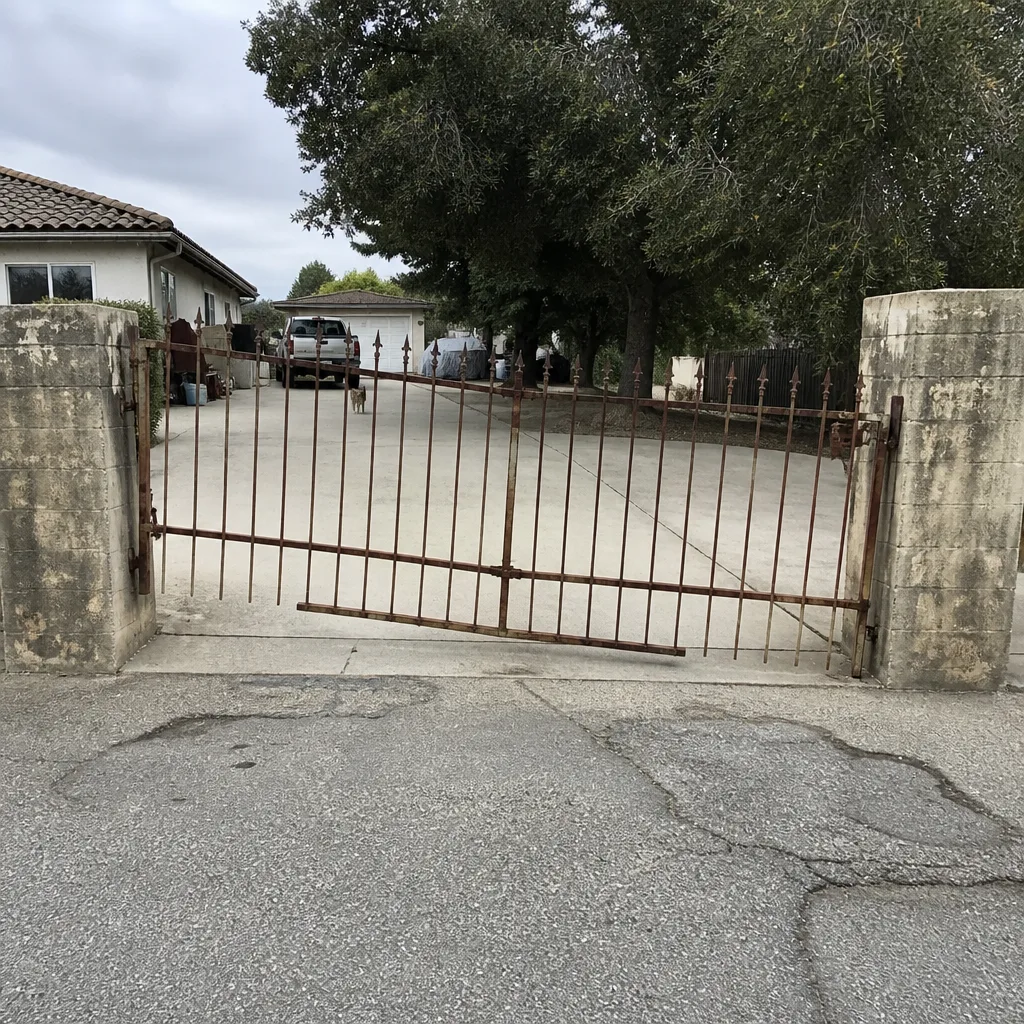 Before
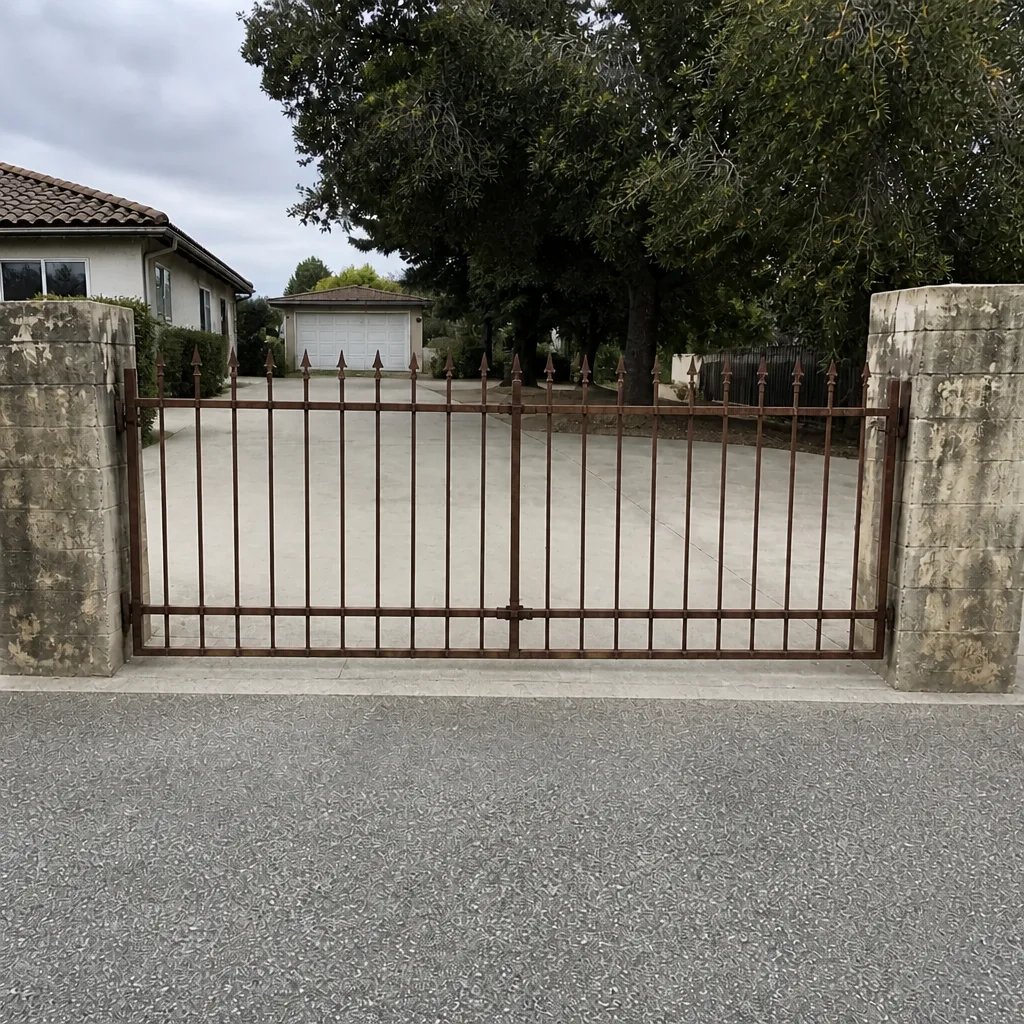 After
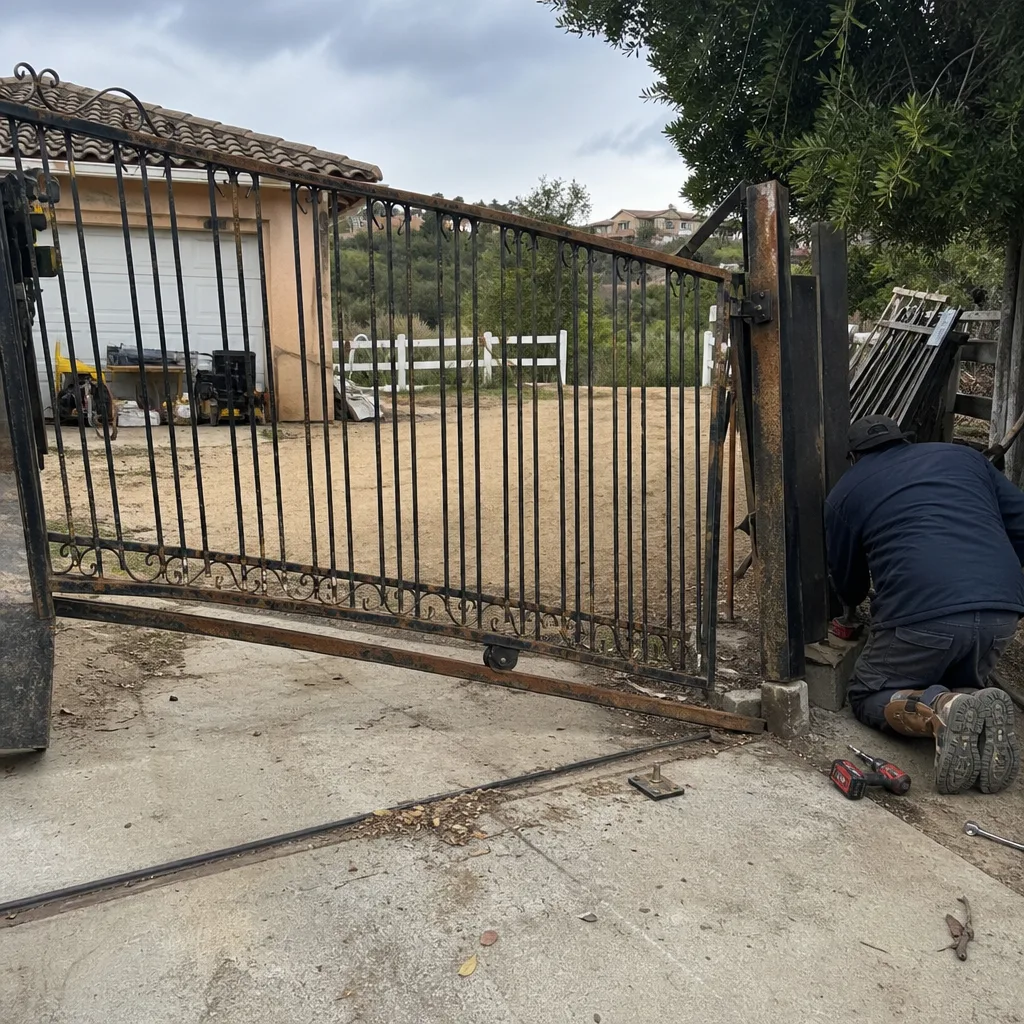 Before
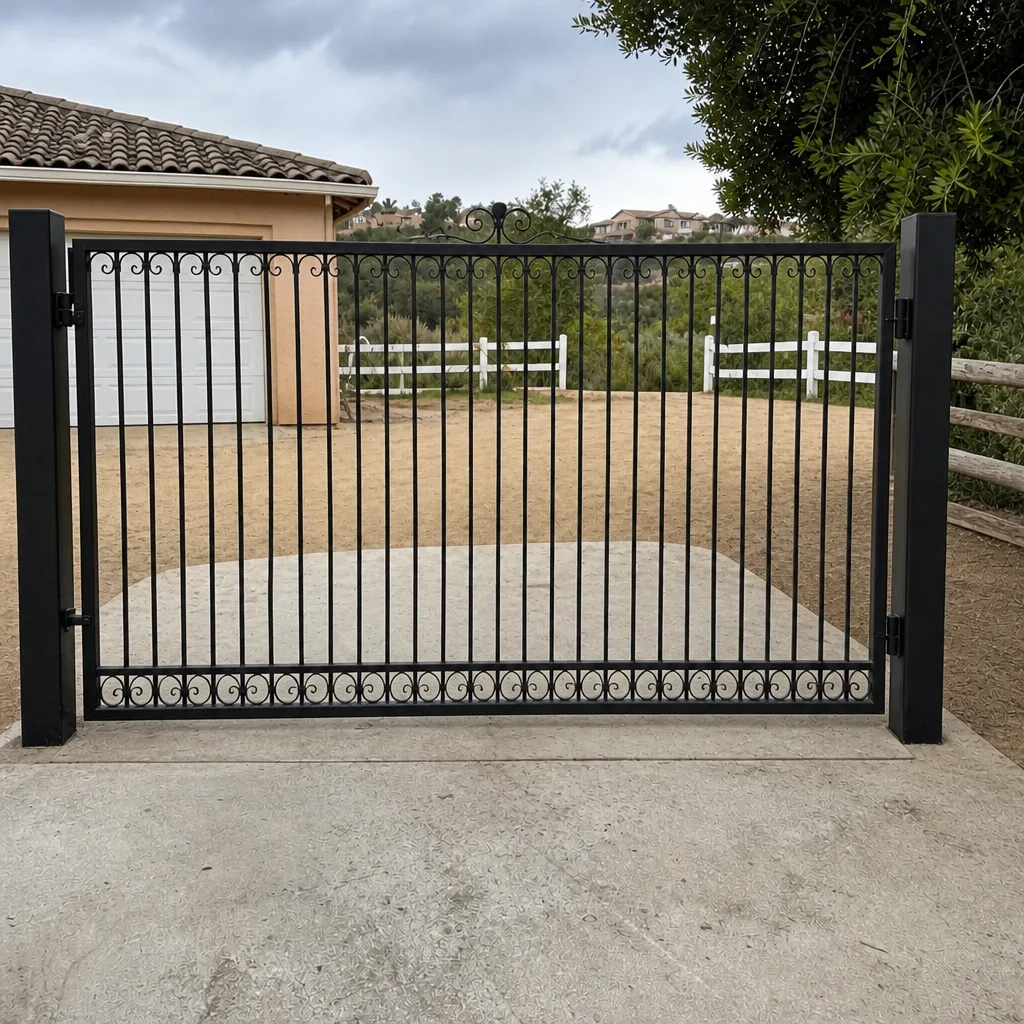 After
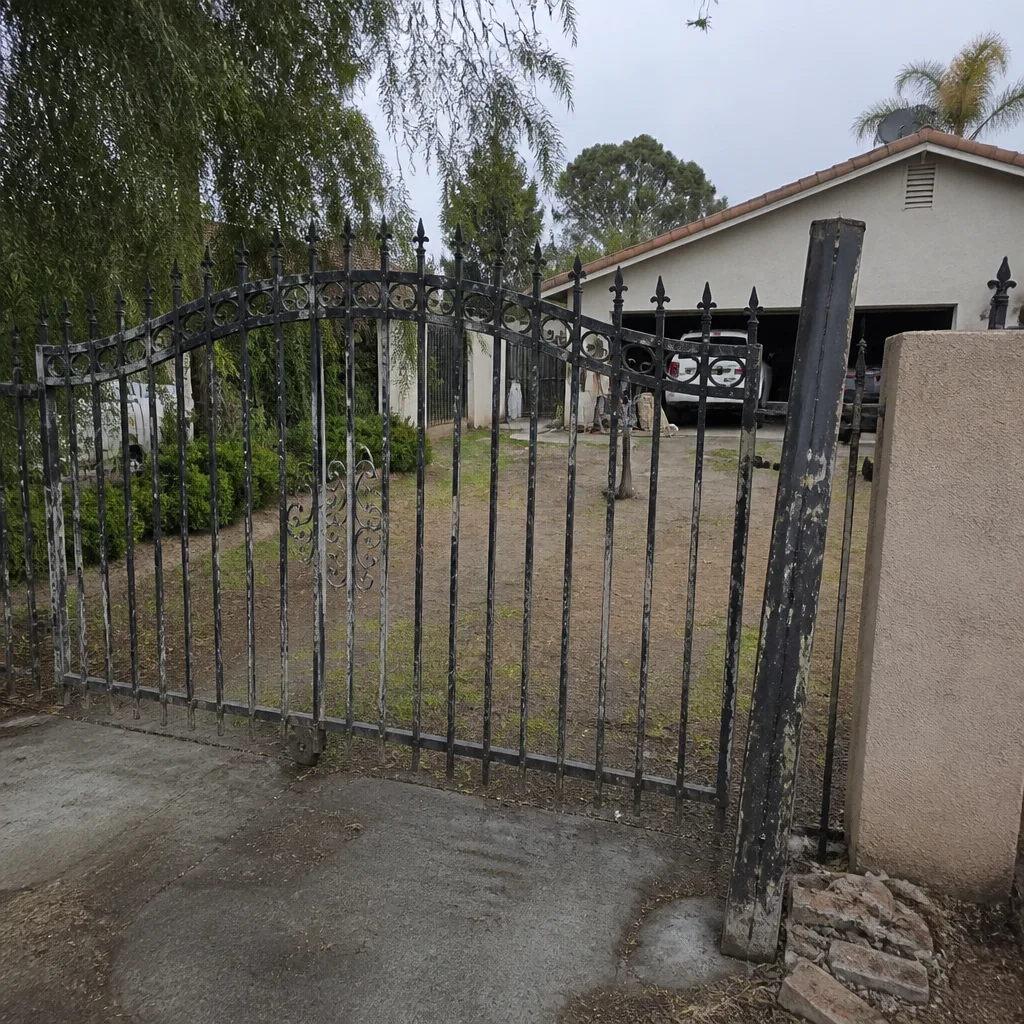 Before
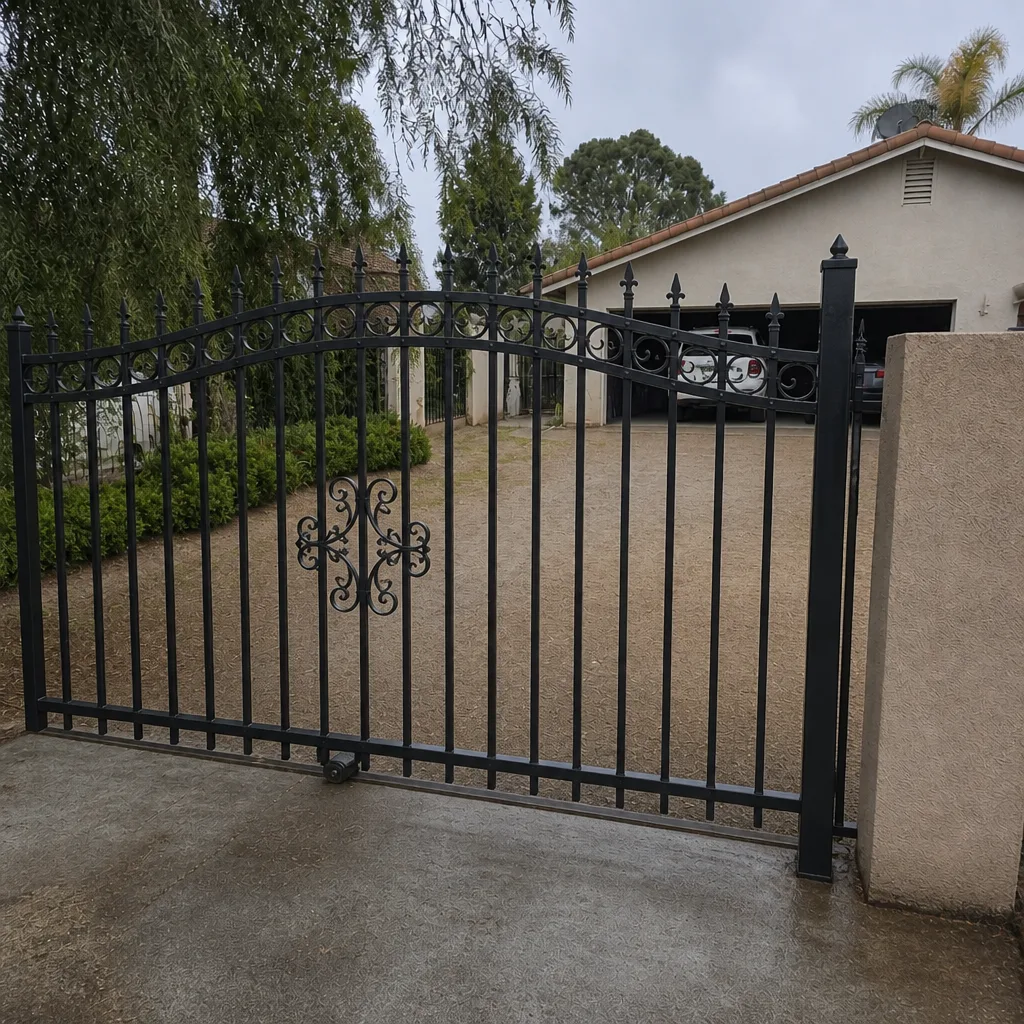 After